Showing posts with label book review. Show all posts

Monday, October 10, 2011

He's at It Again

Writer/artist—and savvy promoter (hence the outfit)—Adam Dembicki displays his newest creations

That wee wunderkind of storytelling, Adam Dembicki, debuted not one, but two new mini comics at the recent 2011 Small Press Expo or SPX as it is more commonly called. The two-day comic-book bender takes place every fall—next year’s event is Sept. 14–15; MARK YOUR CALENDARS!—at the Bethesda Marriot in Maryland and celebrates the li’l guys of graphic novels. And few get much li’l-er than Adam.

Only five at last year’s show, the junior genius presented his first title, Ant Army, an eerie, Twilight Zone-esque mini that is diabolical in its knack for leaving readers unsettled. My ever-Faithful Bloglodytes will remember I gave an esteemed four spiders to Master Dembicki’s terrifying tale (see “Ant Army by Adam Dembicki”).

I was looking forward to seeing my wee pal and his equally talented father, Matt, not only in anticipation of their latest creations, but also because I wanted to give Adam a copy of Rex Riders, the book I’d edited, layed-out, typeset and served as design consultant during my hiatus from the blog last spring (see “REX RIDERS or How I Spent My Recent Sabbatical”). The smile he displayed when he received the book was recompense enough, but he gave me a copy each of his dual debut.

I was thrilled.

As in previous years, I was representing Fanfare/Ponent Mon, publisher of only the finest translated graphic novels from across the globe. The booth was situated close to Adam and his dad’s location, a mere fifteen feet behind me and across the aisle to my left. As attendees came by to check out my wares, I was sure to alert them to the six-year-old creator in the house upon their departure, pointing in Adam’s direction.

At the end of that first day, I bumped into Matt. He was incredulous to the amount of traffic Adam had received. I mentioned that I plugged his son at every opportunity throughout the day, and he was understandably humbled by my magnanimous gesture. The next morning Matt and Adam met me outside the convention hall before it opened where Adam presented me with a piece of original artwork he’d drawn the evening before as a thank you for my help.

The cool artwork gifted to me by creator Adam Dembicki

And it is with full disclosure that I tell you this, and that the young Dembecki’s gift in no way, shape or form has influenced my reviews of his latest masterpieces (ahem).

Jailbreak and The Never-Ending War, are slimmer—and in the case of the latter, black-and-white—yet no less compelling than Ant Army.

His latest efforts, Jailbreak and The Never-Ending War, are slimmer—and in the case of the latter, black-and-white—but no less compelling.

On the surface, Jailbreak is nothing more than just that: a story of a prison escape by a quartet of cons. It’s a more straightforward and furiously-paced tale—akin to that of The Fast and the Furious movie franchise—that opens with the prisoners making good their escape. A frenzied chase, complete with helicopters, ensues with little doubt as to the outcome.

The art further suggests to the story’s black-and-white result, and given a less-proven wordsmith, I’d expect no less. But Adam is nothing else if not a rascally writer, and he leaves his audience on the final page with the disturbing notion that the ending is not as cut-and-dried as it would seem, made all the more poignant by the simplicity of the story and stark art.

The Never-Ending War is more epic in subject matter and befittingly presented in full color; a galactic battle pitting Earth against Mars, which opens many decades into the struggle with the advantage having oscillated between the two combatants. Is the the final conflict? Will a victor finally emerge? That would be telling and would ruin My Faithful Bloglodytes’ enjoyment of Adam’s classic statement on war.


Adam talks about Jailbreak, The Never-Ending War and Star Wars with Joe and Rusty at SPX 2011

A mere six years of age and the Master Dembicki displays a tremendous depth and understanding about war that puts to shame that of the world’s leaders. Earth and Mars could just as easily be the United States and the Taliban or Israel and Palestine or any warring factions past, present or future. And the kid Kipling’s prescience at such a young age should be a wake-up call to us all.

Both Jailbreak and The Never-Ending War get four spiders.

Wednesday, September 29, 2010

Ant Army by Adam Dembicki

I’ve been terribly busy lately, which is a good thing when one freelances, but it has meant my neglecting you, my Faithful Bloglodytes. I hope to be able to share some of the projects I’ve been working on so diligently in the near future.

One event which took me away from “the closet” for a weekend was the 2010 SPX in Bethesda, Maryland. I attended “North America’s Premiere Independent Cartooning & Comics Arts Festival”—as it bills itself—in 2009, as an exhibitor for Fanfare/Ponent Mon, a UK-based indie publisher of translations of graphic literature from around the world. My reasons for going to this year’s indie comics love-in were the same.

Those “Closet” fans with a better memory than mine may remember my mentioning the event in a posting in which I recounted meeting Adam Dembicki, four-year-old son of comics creator Matt Dembicki, whose artwork—a sweet gift which I still cherish—I displayed with a challenge to readers to guess the piece’s subject matter. I am not a spoiler, so won’t reveal the answer here.

Ant Army creator Adam Dembicki

Imagine my surprise when I learned that not only would Matt and Adam be attending this year, but also Adam, himself, had written and drawn a complete book of his own and was going to be doing signings during the show.

I had no delusions that the now five-year-old Adam would recall me—Hell, I’m shocked when my wife remembers me every morning—but looked forward to seeing his cherubic face and heart-melting smile, nonetheless. And giddy with anticipation to get my greedy little paws on a copy of his book. I saw Adam as an artistic genius and couldn’t wait to see how much he’d grown as such.

I was not disappointed.

On its surface, Ant Army is about a war between an alien planet and an invading race of formicary forces from “frozen Earth.” That this anthropod army passes long-abandoned “ghost satellites” on their mission of conquest, suggests the tale is a futuristic one and the ants are a product of millennia of evolution born from the ashes of mankind.

The aliens initially welcome the visitors, unsuspecting of their duplicitous nature, then scramble to defend themselves when the ants’ attack. The battle grows to epic proportions. The aliens proving surprisingly resistant, but the ants are relentless. Counterattack begets counterattack, each wave escalating in its use of bigger and more destructive weaponry, with the outcome always in question.

The ending is worthy of an episode of The Twilight Zone at its best, all at once shocking and haunting, and serves as a brilliant coda to the story’s themes war and genocide. It still gives me chills when I think about it.

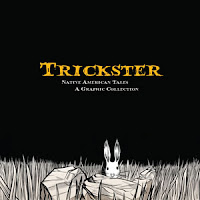
According to editor/production manager/Dad Matt—artist/writer of the undersea adventure Xoc and editor/contributor of the recently released comics anthology of stories inspired by Native American myths, Trickster—Adam drew the pictures first, after which he explained the story to his father, who typed out the words and put the book together.

For his age, Adam presents a surprisingly sophisticated tale. I expected something along the lines of “Hulk, smash!” similar to the way children of his age play with their action figures. It’s the details that stand out and elevate Ant Army above such puerile fare: the aforementioned ghost satellites; the strategies the opposing armies use against one another; the breadth and savagery of the battle; the book’s ability to continually surprise; and its jaw-dropping finish.

My mind reels at what Adam has in store for us in the future. And I cannot wait to find out!

Ant Army gets four anthropo—er, spiders.

Wednesday, June 23, 2010

Craig Yoe’s Weird But True Toon Factoids! by Craig Yoe

I can’t imagine anyone not finding something of interest in Craig Yoe’s Weird But True Toon Factoids!, a delightful collection of cartoon minutiae from across the globe that spans more than a hundred years from the earliest examples of newspaper and children’s book illustrations to the cartoons of today.
Each page is stuffed with fascinating trivia about the characters, their creators, their influence on society and culture. Even someone who may not like cartoons would have their interests piqued with Yoe’s celebrity-centric snippets, such as Michele Pfeiffer’s amusing self-evaluation of her infamous lips—“I look like Donald Duck”—or the superheroic inspiration for Elvis Presley’s renown look—Captain Marvel Junior. Pages are also seeded with rare drawings done by celebrities themselves—some delineated exclusively for the book—like Jimmy Stewart, Bob Dylan and George Takei.

As a longtime aficionado of all-things-toon, I was familiar with some of the facts presented in the book. But more often was surprised by the tidbits therein, like Tweety Bird’s original color being change from pink to yellow, because censors believed the character was nude. And those snippets I was aware of were accompanied by a rare illustration or photo I had never seen before, such as Batman creator Bob Kane’s swimsuit sketches of Marilyn Monroe whom he had met at the beach one day when she was still merely Norma Jean.

Yoe casts his probing fingers into all avenues of the genre: Comic strips, political cartoons, advertising icons, comic books, animated features, television and magazine illustration. The facts come fast and furiously, but Yoe—a master designer—makes each page seem unhurried and roomy. Nonplused by one entry? The one following will please. And Yoe’s odd trim size (9.6 x 6.1) marries perfectly with the fun, often quirky, subject matter. You’ll have a hard time putting it down—I found myself getting lost in its pages all over again while putting this review together—and a book you’ll have fun sharing with others.

Craig Yoe’s Weird But True Toon Factoids! gets four and a half spiders.

Wednesday, February 17, 2010

The Brief Wondrous Life of Oscar Wao by Junot Díaz

I originally heard about The Brief Wondrous Life of Oscar Wao on a Sunday-morning program. In the segment, a lot was made of the fact that the main character—the eponymous Oscar Wao— was a comic-geek, and the author liberally referenced comics and other pop-culture minutiae in the telling of Oscar’s tale. This facet would nary induce a blip on the literary radar were it not for the fact that Wao had just won the 2008 Pulitzer Prize for Fiction.

That the highest honor in bookdom should go to a novel whose hero is a comic lover and whose author used four-color lore—at times daring to (gasp!) quote comic books—was unheard of. Apparently, the correspondent was unfamiliar with 2001 Pulitzer Prize winner, the exemplary The Adventures of Kavalier and Clay by Michael Chabon, a novel that doesn’t merely cite comics, but is actually immersed in that particular art form’s world. Fortunately, the segment was more journalistic than sensationalistic, but the inference that the Pulitzer Prize committee had lowered its standards or that the award had been cheapened by honoring Díaz’s work was plainly evident.

I didn’t care about the Pulitzer or the disparaging subtext of the segment—comics aficionados are used to it—the correspondent had me at “Fantastic Four,” to paraphrase Jerry Maguire. Wao went straight to my Christmas list and made it into my greedy little paws a few months later.

The Brief Wondrous Life of Oscar Wao is the story of an unsightly, social misfit Dominican’s journey to getting laid. Díaz uses the idea of achieving sex as a euphemism for Oscar’s struggle in overcoming his nigh-crippling shyness/awkwardness/not-fitting-in-ness and gaining acceptance. It’s a universal theme, one not exclusive to Dominicans.

Much to my delight, the book opens with an epigraph from Fantastic Four, Vol. 1, No. 49. Díaz further sets the stage with a poem from Nobel Prize (for Literature) winner Derek Walcott. Both present important facets to Oscar’s character: his affection for comics—more importantly the odd sense of greatness that geeks have for being expert in something beyond their fellow man, whether facility in comic books or fluency in Klingonese—and his feeling of displacement.

Author Díaz quotes World-Devourer Galactus in Wao’s opening epigraph

A short introduction on the Dominican idea of fukú follows. Fukú is an ancient curse with which our hero believes himself to be cursed. Whether Oscar is a victim of fukú or simply uses it to explain his perceived misfortune is left for the reader to decide.

An intriguing and clever start, the efficacy of which was immediately derailed by Díaz’s preponderance of footnotes. Or should I say, foot“novels”? Four of the seven introductory pages discussing fukú contain them. One travels half a page only to continue and conclude at the bottom fourth of the succeeding one. They are less frequent as the story progresses, but not less voluminous—at times extending more than two pages!

These short novels-within-a-novel most often explain references to Dominican culture, figures and language in the main text. They are engrossing in their own right, but intrusive. I found myself taking a deep breath before tackling them and pausing to recollect the main storyline upon my return. It was like putting a traffic stop on the Autobahn.

Far fewer of the notes concerned comic-book or pop-culture references—most of those were written into the text in a way that they needed no further explanation—and the info contained in those was already familiar to me. So it not only impeded the flow of my reading, but also proved aggravating each time I realized I need not have stopped, which I continued to do for fear that I might meet some nugget of info of which I wasn’t aware.

When Díaz wasn’t interrupting Oscar’s journey with footnotes, he was abruptly changing the story’s point-of-view. From Oscar to his sister, to the childhood tale of his mother, and back again. There were chapters that I was several pages into before I realized the narrator had changed, forcing me to return to the chapter’s start.

An author’s use of language or particular character’s vernacular normally deepens the reading experience. The opening dialogue of John Kennedy Toole’s brilliant 1981 Pulitzer Prize-winning novel, A Confederacy of Dunces, is a perfect example. The heavy Cajun accent that Toole employs takes some getting used to, but well worth the effort. And once familiar—by the end of that inaugural scene, easily—it proves no obstacle for the remainder of the book. Like anchovies in a well-crafted puttanesca: they add depth and complexity to the dish, but will only go unnoticed if not included.

Díaz’s liberal use of Spanish could have had the same effect, enhancing the depth and complexity of the novel and its characters. Unfortunately, the reader is never allowed to familiarize themselves with Wao’s voice—there are just too many other distractions—so the author’s use of language only exacerbates the situation.

I got the sense as I was reading that Díaz didn’t trust his writing talents or the story or both. It was as if he were trying to be clever to compensate.

Wao is nonetheless a good book. Not a great book. Just a good one. And that has less to do with its not meeting my high expectations than with the author’s overuse of these literary devices.

And because Wao is a Pulitzer Prize winner, it has to be held at a higher standard. Compared to the aforementioned Chabon and Toole classics, The Brief Wondrous Life of Oscar Wao falls painfully short and gets a disappointing three out of five spiders.

Friday, November 6, 2009

The Professor and the Madman by Simon Winchester

Imagine writing an English dictionary… the first English dictionary. Where do you start? I have already used ten words—sixteen if you count the introduction of this sentence before the m-dash—of what would be the tens of thousands… millions even… of entries needed to complete such a mind-boggling enterprise. Remember, there are no antecedents on which to draw your list, no previous incarnation from which to compare, to see what worked and what didn’t, so as to make appropriate amendments. Where do you get the words? The definitions? Who proves their accuracy? How will you know when the job is complete? You’d have to be insane to even consider the assignment.

This was the monumental endeavor facing the men who created the Oxford English Dictionary, a task chronicled in the fascinating The Professor and the Madman by Simon Winchester. Begun in 1958, the OED, as it is affectionately known in belletristic circles, would take seventy years and twelve capacious tomes to finish, with an additional five supplements produced in the ensuing years, which were incorporated into the original dozen a score thereafter for the second edition. And though neither the work’s overseer, James Murray, nor any of its principals were mad, the OED’s most prolific contributor was certifiably so.

To the shepherds of the OED, it wasn’t enough simply to account for a word and define it. Oh, no, that would be too easy! They added quotations, culled from the greatest writings of history, to best exemplify the particular usage of each entry. To this end they enlisted the help of volunteers throughout the country, to contribute clippings for those words with which Murray and his colleagues needed aid gathering information. One such participant was Dr. William Chester Minor, an American and former surgeon for the Union Army during the Civil War, living in England.

Minor sent in scads of quotes—his contribution to the OED cannot be overstated—done with such exactitude, that the OED team was able to utilize his offerings with little if any editing. As more and more entries attained Dr. Minor’s signature, Murray became more inclined to meet this philological wonder. The doctor’s attempts to dissuade Murray’s intentions of visitation did naught to flag the professor’s persistence, nor did it seem abnormally peculiar to Murray. After all, he was a word nerd himself.

Even discovering that the address to which Dr. Minor directed him was that of Broadmoor Criminal Lunatic Asylum didn’t overly concern Murray. He simply felt that the institution was the good doctor’s place of employ. Imagine his shock upon learning that the man to whom the professor was directed upon arrival was not Dr. Minor, but rather the facility’s director and that he would be escorting Murray to the room of Dr. Minor, a patient of Broadmoor for more than twenty years!

The stories of the American surgeon who goes mad, and the humble son of a Scottish tailor who becomes one of England’s most prominent scholars, and how these disparate lives cross is captivating. Winchester’s narrative is concise, not flowery, and compliments the subject matter nicely. Using interstitial moments to explain words, their histories and usage, including excerpted definitions from the OED itself, the author neatly conveys the onerous task Murray and company set for themselves. And though they sometimes bog down the story with their dryness, for a philologist like myself, they enhanced rather than took away from my enjoyment of the book.

The Professor and the Madman gets three and a half chelicerate arthropods.

Tuesday, October 13, 2009

A Carrion Death by Michael Stanley

I consider myself old school when it comes to detective fiction, preferring classic hard-boiled authors and characters, like Raymond Chandler and his iconic Philip Marlowe, Dashiell Hammett’s Sam Spade, and the triumvirate of Mickey D investigative creations, John D. MacDonald’s Travis McGee, Gregory McDonald’s Fletch and Ross MacDonald’s Lew Archer. As for Robert B. Parker’s Spenser novels, I consider them soft-boiled. They’re okay, but reading them is like eating a candy bar when you’re starving: it tastes great, but afterward you’re unfulfilled.

I wasn’t expecting much from A Carrion Death. Where was the big city, the dirty alleyways, the littered streets, the crumbling pavement, the pervasive shadows? Death takes place in the Botswana area of Africa; the glaring sun, empty plains with killers more often of the four-legged kind. And what about the novel’s hero? Where’s the lone manly man with the turncoat gangster moll hanging from his muscular arm? Death’s Detective Kubu is zaftig—Kubu, the character’s accepted nickname, is actually Setswana for hippopotamus—with a loving wife, who wrestles with excuses to ignore her dietary constrictions rather than with thugs.

Boy, was I pleasantly surprised. Because of the odd differences, A Carrion Death is an enjoyable hard-boiled detective novel and then some.

Like every great whodunit, the novel opens with a dead body, but his one isn’t stabbed, strangled or shot, or rather, had it been, it is impossible to tell, as it’s been half-eaten by hyenas and other predators indigenous to Detective Kubu’s jurisdiction (Talk about evidence being tampered with!). So how does Kubu even know that this is nothing more than simply a victim of Africa’s natural order? Ah, there’s the first rub. What follows leads Kubu from Diamond Mines to tribal rituals; from college mates to the country’s most powerful and influential people; from wildlife watering holes to the seedy, dangerous ones of the human variety; Kubu’s dogged pursuit seemingly thwarted at every turn.

As with most hard-boiled novels, the solution to the crime is almost secondary to the characters, their interaction and pursuit of justice. Detective Kubu is a revelation; everything the aforementioned gumshoes are not, but no less a classic hard-boiled character nonetheless. A man “of not inconsiderable bulk,” as first described, he has a penchant for food and drink; a loving relationship with his wife and a teasing, playful one with his sister-in-law. At first glance, Kubu’s boss, Jacob Mabaku, is a stereotypical, interfering, pain-in-the-ass superior, more concerned with procedure than finding answers. His true nature, though, develops into a refreshingly complex individual. Other notables: Ian MacGregor, a Scotch transplant and pathologist of the Botswana police, who enjoys a good tipple and chasing the ladies; and Johannes “Bakkies (pickup truck)” Swanepoel, a South African detective sergeant, who shares a nickname based on his huge physique like Kubu with the exception that Bakkies “converted the food to muscle while he (Kubu) turned it to fat.”

SIDE NOTE: Although their name is used derogatorily as an insult to the overweight, hippopotami are predominantly not fat, but muscular. They actually sink in water and gallop on river bottoms. Hence their name which comes from the ancient Greek: hippos, meaning horse; and potamus, meaning river; i.e. river horse. Had their size been a result of fat, they would be floating. Also, hippopotami are hardly docile creatures. In fact, more people die from hippopotami attacks than any other creature in Africa.

Thus endeth the lesson. Now back to our regularly scheduled review…

A Carrion Death is the collaborative effort of two writers, Michael Sears and Stanley Trollip, hence their pen name, Michael Stanley. Their union is seamless. Though they liberally sprinkle native languages throughout the novel, their usage does not bog down the pacing, instead enhancing the tale. Still, Messieurs Sears and Trollip provide a modest glossary, one I didn’t need to reference while enjoying the book. They also supply a listing of characters with brief bios and a map. These I did reference, not so much out of necessity as out of interest.

A Carrion Death gets four spiders. I am looking forward to detective Kubu’s next case. In fact, I’ve already gotten the book, The Second Death of Goodluck Tinubu. Had I not read Death, the title of the follow-up alone would have had me salivating!

Monday, September 21, 2009

The Pale Blue Eye by Louis Bayard

A retired New York City detective enlists the aid of a young cadet by the name of Edgar Allan Poe to solve the mystery of a suspicious suicide at West Point during the military academy’s early days in this engrossing historical whodunit by Louis Bayard.


As a fan of both Poe and historically-based fiction, I was immediately intrigued by the premise. Bayard smoothly captures the spirit and ambiance of Poe’s work—even the most innocuous scenes carry a sense of foreboding—and the language of the era, without those elements disrupting the flow of the narrative.


Detective Gus Landor is a fascinating character. Forced into retirement and out of the city due to work related stress, he reluctantly accedes to the school’s wishes to look into the matter only to find his efforts rebuked at every turn by the academy’s upper echelon’s efforts to keep the whole affair as quiet as possible. West Point’s very existence was already mired in controversy and under critical review, and even something as seemingly innocent, albeit tragic, as a suicide could lead to the school’s closure.


With the faculty providing no assistance, Landor convinces his clients to allow him to enjoin Cadet Poe—impressed by the youth’s unique perceptive talents and methodical, yet odd, behavior—to help him. The resultant mix of seasoned, but tired, big city cop and erudite, peace-loving military student makes for an enthralling combination wrought with tension.


The ending shocks like the best of Poe’s writings.


The Pale Blue Eye gets four and a half out of five spiders