Saturday, November 27, 2010

Going for the Gold


1988 U.S. Olympic swimmer Janet Evans displays one of her three gold medals

With the advent of the 1988 Macy’s Thanksgiving Day Parade came another request for my services. Once again I was asked to don the red-and-gold and play the titular metallic superhero, Iron Man, among many of the characters with which I shared the stage—or in this case float—at the spectacular 1987 affair. That event; as you may recall from my critically-acclaimed, multi-part epic, “I Love a Parade;” featured a trio of considerable debuts, all as part of the historic 25th anniversary of everyone’s favorite Wall-Crawler. The beloved Spider-Man balloon, the Marvel Universe float and a gaggle of newly-commissioned personal-appearance characters all were seen for the first time—the ultimate comic-book geek orgasm.

Props to marvel for ponying up the Benjamins for the event. Macy’s Thanksgiving Day Parade sponsorships, a.k.a. entry fees, were in the tens of thousands. And that was if you were accepted, which, quite frankly, was about as difficult as being turned down for a spot in the Surreal Life. Basically, if you had the dough, you could go.

Spider-Man loomed over the Marvel Universe float during the 1988 parade. That tiny white/silver figure above and behind the bell tower is Silver Surfer

Factor in additional fees for submitting both a balloon and a float; the not-insubstantial costs of designing and building both aforementioned elements; and creating about a dozen new costumes and hiring actors who’d be wearing them and one is easily looking at a price tag close to, if not above, a hundred grand. And this move was made before multi-billionaire, Revlon owner, Ron Perelman purchased the company.

Spider-Man actually got an invite to the 1988 event. The figure in white over my left shoulder is Janet Evans

Any participant could up their sponsorship each year, although any particular float was allowed only three appearances before a new entry had to be created. This keeps the parade from becoming stale with oft-repeated floats, yet gives Sponsors a chance to get a triennial bang for their entry buck.

Balloons were under no such stipulation. As long as the company paid for its inclusion, the inflatable was still in flying shape—the ginormous signature helium-filled wonders lasted only a handful of years before they degenerated into unusability—and there was public demand, the balloons were featured, which explains the inaugural Spider-Man’s many years of service before forced retirement.

Thus, Marvel re-upped both their sponsorships.

But how to supersede the year prior. What could Marvel do to top the pomp and circumstance of the trifecta firsts and make people forget the monster melee betwixt hero and villain that took place on the float? It would take an Olympian effort to accomplish such a feat. Fortunately, the company had a quartet of Olympians on hand.

Less than two months before, the 1988 summer Games of the XXIV Olympiad were held in Seoul, South Korea. Highlights included U.S. diver Greg Louganis’s inspiring capture of back-to-back golds on both diving events after hitting his head on the board in a preliminary round, which resulted in a concussion and stitches; Canadian runner Ben Johnson setting a world record in the 100m, only to be disqualified for testing positive to performance enhancing drugs; U.S. athlete Jackie Joyner-Kersee’s dual victories in heptathlon and long jump; three gold medals for U.S. swimmer Janet Evans and two for return participant Carl Lewis; and U.S. runner Florence Griffith-Joyner’s winning three golds and one silver medal, breaking two world-records (100m and 200m) in the process, records which still stand.

Florence Griffith-Joyner (Flo-Jo), her sister-in-law, Jackie Joyner-Kersee, Carl Lewis and Janet Evans were all featured on the Marvel float. It was a masterful stroke teaming up real-life heroes with comic-book ones—the company Nabobs wisely excluded supervillains—especially Olympic champions whose accomplishment’s were international in nature and still fresh in the country’s mind, achieved a mere seven weeks before Thanksgiving. Spidey and his superhero pals would become synonymous with U.S. athletic excellence, patriotism, hot dogs, Mom and apple pie. Plus, the presence of such national treasures all but ensured maximum television coverage of Marvel’s float.

Plus, it certainly didn’t hurt that three of the four Olympic stars were African-American and two of those were women, two segments of the population woefully under-represented the 1987 parade—Luke Cage, aka Powerman, was the “token” black hero and the only two female characters were both supervillains! With the evil-doer ban in place, that would mean a complete lack of women, so estrogen domination was paramount.

But wait, there’s more!

The Marvel parade-planning committee pushed the minority meter into the red with the inclusion of the Harlem Boys Choir, a world-renowned singing group, founded in 1968, which drew its membership from the predominantly African and Hispanic New York City neighborhood of Harlem. At its peak, the group had five hundred choristers, although there were approximately fifty boys represented on the float.

The population explosion on the float meant a curtailment of superhero activities—there wouldn’t be another character battle in front of Macy’s—but it did not negate a moment before the historic retail edifice. That would now be provided by the Harlem Boys Choir, which would be featured singing carols when the ponderous mobile metropolis hit Herald Square.

No choreography equaled no rehearsals for the character actors. We merely had to show up at the appointed hour and place to suit up before getting transported to the float. In 1987, the Marvel offices on Park Avenue South served as the launching pad. But Babs, the Personal Appearance Department’s head, chose a different tactic for the 1988 festivities. I seem to remember her worrying over a new city edict that restricted vehicles crossing Broadway after 6 A.M. the morning of the parade, which meant she and the actors would have to be at the office no later than 5 A.M., in order to dress—quickly!—crowd into a van and make it cross town before West-Side access was constricted.

The original Statler Hotel, which begat the Penta, which is now the Hotel Pennsylvania

She sagely concluded that nobody wanted to stumble out of bed as 4 A.M.—or earlier—so she booked a room at the Penta (née Statler) Hotel on Seventh Avenue at 31st Street across from Madison Square Garden where she had the costumes delivered from Marvel HQ the day before. Opening in 1919, the Statler—today known as the Hotel Pennsylvania—is one of the city’s most historic (read: oldest) hotels. It and the Waldorf-Astoria were the name inspirations for the crotchety, elderly hecklers in the audience of The Muppet Show. I actually stayed there when it was still known as the Statler during a high school field trip in 1982.

Muppets Waldorf and Statler

Even then the accommodations were in terrible condition. I don’t believe the hotel had been renovated in the six plus decades of its existence. The fading wallpaper was a light mustard hue, long-stained over the years prior to when smoking was banned in the public thoroughfares of hotels. The rug was worn to sandpaper grade filaments with nasty-looking mauve and charcoal splotches—some the size of wading pools—every few feet. The dim lighting cast a jaundice glow, which only accentuated the depressing condition of the walls and floor.

This décor continued into the rooms, which were entered by heavy, self-shutting doors that would induce anyone unfortunate to get caught by its prodigious weight, to painfully mumble “Put the Candle Back!” The bed cover was a dull cranberry of the sort found in tapestries from the 1300s with the tactility of flock. Gray sheets could not hide the lumpy mattress, which resembled a piece of Razzles gum. And it didn’t feel any better. It was like sleeping on a back of sneakers.

Babs asked if I would be interested in staying there again in order to baby-sit the costumes. Seeing as I would otherwise be commuting into the city from Forest Hills, Queens, a trip that would add an hour to what was sure to be an already sleep-prohibitive wake-up time, I leapt at the chance.

I checked in with my modest gym back carrying fresh undies and toiletries at around 8 P.M. The rooms seemed somewhat better, but still would not have passed muster with the house staging experts on the Home & Garden Channel. What little room there was, was monopolized by the costumes. The great green duffel bag that housed the Hulk fought for space with a metal rolling clothing rack packed with body suits and tights and the giant black pizza box in which was stored Captain America’s shield. Miscellaneous helmets, masks and headpieces covered every table, bureau and chair. Despite the mess, the costumes were a vast improvement to the décor, providing splashes of color where there hadn’t been in decades.

I placed a wake-up call with the front desk for 5:00 A.M. Early, yes, but had I been coming from home I’d be setting the alarm for 4:00 A.M., and sneaking out of my apartment as quietly as possible so as not to wake up the roosters in the neighborhood. An additional advantage to accepting the baby-sitting job was breakfast. Boss Babs dangled the incentive before me when offering me the assignment, little realizing I would have done it regardless. So I had reception transfer me to room service, which whom I scheduled and ordered my early morning repast for the next morning, including an additional pot of coffee, cups, spoons and condiments for my impending guests.

The phone rang a few minutes past the appointed time. This was not unheard of back when wake-up calls were made by human beings as opposed to computers. Hell, there are places today that simply ring your room until the receiver gets picked up without so much as a female H.A.L. on the other end to say “Good morning.” Nothing more than total silence, which is a bit unnerving and quite inhospitable. When an actual person was making the calls, it is understandable that guests toward the end of the request list for each particular time slot would receive their calls slightly past that particular time.

Stephen . . . Time to wake up . . .

I had just enough time to shower before Room Service arrived. A food dolly was wheeled in, adding to the clutter that threatened to overcome the room. I was gobbling down the last crust of English muffin, when the first hero arrived. It is sometimes odd what one remembers and in this instance I remember clearly that Marvel character actor David was the first arrival. The year prior Dave played Robocop—yes, that Robocop—the explanation for which was given in “I Love a Parade.” If you’re waiting for the book, don’t hold your breath, just click the link and enjoy! But for those under a time crunch, his inclusion in the 1987 Marvel Universe float concerned corporate licensing, a new Robocop cartoon and the marketing department. You do the math. The fact that Paul Verhoeven’s distopian law-enforcement agent was left off the 1988 float invitation list may tell you something about how well that experiment went.

Anyway, Dave was playing Daredevil, the Man without Fear, the inspiration for the eponymous and lamentable 2003 movie starring Ben Affleck, Jennifer Garner and Colin Farrell. It was by no means the worst comic book film adaptation, and had some nice touches, like Matt Murdock’s heightened senses forcing his having to sleep in a sensory deprivation tank. But the story was uneven and overly dark, and the casting was ill-advised; having fair-skinned, all-American–looking Garner play Elektra—the daughter of a swarthy Greek ambassador—for example.

Over the next half hour, actors arrived, packing in to join me and the others in various stages of undress, java drinking and chatting about the state of our individual careers. Clothes were strewn about; costume bags were thrown over the furniture; half-drunk and empty coffee cups were perched atop every flat surface; and backpacks, saddlebags and whatever tote holding each thespian’s personal belonging—everyone in New York has a bag of some sort—were thrust in each nook and cranny, adding to the disarray begun by my unmade bed and dirty breakfast dishes. It resembled the stateroom scene from the Marx Brothers A Night at the Opera.

Babs arrived a few minutes before our departure time. Her appearance did nothing to curtail the actor’s state of undress. She sat on the only available corner of the bed and kibitzed with her boys, like the madam of a male brothel preparing her johns before a big weekend. Still, she made sure to get us out of the room and into the awaiting van, so that we made it to the Upper West Side where our float was positioned to take its place in the parade line-up before 7:00 A.M. Otherwise, we’d be forced to park several blocks away and haul our colorfully festooned asses to the demarcated area, as streets and avenues were summarily closed to traffic the closer it got to kick-off time.

Cap shimmies up the thirty-foot rear tower, which was book-ended at its base by giant comic books

So for two hours, us heroes had to wait around in the cold, late-November air. And the winds that whip down Central Park West can be unforgiving. Even wearing thermals did little to assuage the bitter cold. Some of the actors huddled in the bell tower with Mark who wisely donned the Hulk uniform early to keep warm. Other, more adventurous types, “played” on the float, shimmying up the tower at the rear of the construct and leaping from building to building to entertain the crowd. While still others, greeted our enthusiastic young fans who crowded the sidewalks awaiting the parade to begin. Their embracing love and 98.6º degree body temperatures took the chill off where thermals could not.

The Harlem Boys Choir showed up within a half hour of kick-off. They may have walked the additional blocks, but more likely, their status as special guests allowed them vehicular access at a later hour whereas us heroes and the hundreds of clowns, jugglers and miscellaneous characters that fill in the gaps among marching bands, floats and balloons along the parade route were considered mere window-dressing, just cogs in the machinery of the Macy’s Parade.

The boys were all wide-eyed and smiles, not only from being in the world-renowned annual Thanksgiving Day extravaganza, but also because they were sharing the experience with Spider-Man and the rest of their comic book heroes. The arrival of the Olympians minutes before start-up did little to avert the attention and wonder they bestowed on us (Hah!). We, in turn, genuflected before Carl Lewis, Flo-Jo, Janet Evans and Jackie Joyner-Kersee. I mean, Flo-Jo alone was an athletic god, the fastest woman in the world, two records that still stands more than twenty years later (and yes, I realize I mentioned it earlier in the post, but it bears repeating.)!

Were that Flo-Jo’s demeanor echoed the greatness of her accomplishments. Her unassailable aloofness in the face of the awe and supreme admiration she was shown by her fans stood in stark contrast to the magnanimity of the other three Olympians, whose grateful smiles and humility accentuated their brilliance. Contrarily, Flo-Jo was unapproachable. She took her position atop the faux building overlooking the bell tower and remained unmoving throughout the parade, her statuesque form enveloped in a fur coat like something that Diana Ross wore in Mahogany. Carl Lewis—a quietly sweet, humble and friendly man—joined her, with Evans and Joyner-Kersee taking spots on opposite sides of the bottom level.

For safety’s sake, most of choristers were arrayed about the lower level and stairs leading up to the belfry. The older and bigger members took places on the upper areas. All were forewarned about the lurching the float was prone to while in motion and duly told to hold on.

That’s Carl Lewis in the ecru coat, upper left

With most of the real estate on the entry occupied, scant room was left for the heroes to play. As a result, the action entailed little more than waving to the onlookers and periodically walking alongside the float, making brief stops among the crowds to shake hands. The iron “diaper” that covered my nether regions, still dug into my inner thighs, but I wasn’t going to let that interfere with my putting on a good show for the fans who waited in the cold as long as, if not longer than, we did.

Unlike the 1987 affair, at which it made its debut, the Spider-Man balloon was placed directly behind the float in 1988, looming over the cityscape mash-up and its heroes. It was awesome. Whenever I felt myself waning, I gazed upward and the ginormous inflated Web-Spinner made me all giddy and excited. Also contrary to the parade of the year before, Spider-Man was actually featured on the float. The year prior’s inanity of the Marvel Nabobs’ fearing the public might not be able to grasp the concept of having two Wall-Crawlers in the event—though one was a giant helium filled representation and each were well distanced from one another—ceased. Not only was Spidey present, but his stellar inflatable was nearly on top of him!

The placement of the float in 1988 was further toward the back of the line-up, which was undesirable. The closer to the rear, the longer one had to wait to get started, even though the call time was the same. By the time we entered Herald Square, where the float stopped and the Harlem Boys Choir sang, it was close to noon, five hours from the actors’ last chance to empty their bladders in the hotel room. No one was ignorant of the fact that coffee is a diuretic, i.e. it makes you pee, but not having at least one cup that early in the morning was suicide. Of course, by the time the wee choristers were singing us heroes wanted to die, the pressure in our bladders was that acute. And the frigid cold exacerbated the pain. Don’t even ask me what they sang. Visions of sugar plums was the last thing dancing in my head.

The official finish of the parade came at Macy’s main entrance on 34th Street after it turned off Broadway, where now—since Mayor Bloomberg’s initiative to turn Times Square into a pedestrian mall, which forced the alteration of the route—the performances now take place there and the parade disassembles further along. Our float had scarcely taken the right onto 34th when the heroes started bolting for the hotel. Any question of why Babs chose the Penta crystallized in brilliant clarity at that moment. The hotel was only a block away. One block to urinary bliss. You’d think Galactus had returned to swallow the Earth, and us heroes were rushing to save the day.

Sorry, folks. I'd love to stay and chat, but I gotta GO!

Jeremy—Spider-Man—had the hotel room key and breaking land speed records dodging the dispersing crowds and leaping over wee fans with outstretched arms to shake hands. I hobbled along as best I could, trying my best not to look like I had diaper rash. The delay prolonged my anguish but worked in my favor once I got to the room. By that time I arrived, the faster heroes had been able to do their business and the bowl was clear. Had I been forced to stand around waiting, I don’t think I would have made it. The seemingly arctic temps had forced my pork ’n’ beans to retract so far into my pubic area, they were tickling my uvula. Even the my fingers, which felt like frozen mozzarella sticks, could not stem the flow once I was able to coax the boys out of hiding.

Catastrophe averted! I shudder to think how close I came to bringing new meaning to Iron Man’s sobriquet Golden Avenger!

Monday, October 18, 2010

Are the Stars Out Tonight?

Ken Steacy’s caricature of himself as R2D2

He hit me!

I haven’t seen my old friend Ken Steacy in a decade and the first thing he does is wallop me. Granted, I gave a big hug to Joanie—his lovely wife who I haven’t seen in fifteen years—first, but it wasn’t anything scurrilous; nothing you’d see on Cinemax after midnight. Heck, I’ve witnessed more risqué maneuvers on iCarly.

Did I owe him money?

Perhaps I should back up…

Faithful Bloglodytes will no doubt remember the epic posting of a year ago (see “Jeepers Creepers”), wherein I recounted my first encounter with wild man Ken Steacy at Mid-Ohio Con. There, he took it upon himself to fashion replacement eyes for my suit, which con headliner Todd McFarlane teasingly commented as being “too small.” There was danger, suspense, and yes, hilarity ensued. More importantly, though, I survived!

Steacy drawing at the 2009 DragonCon in Atlanta. This is the first in a series of progressive photos taken by Anthony Taylor of the artist sketching a hula girl. Hey, isn't that R2D2’s shirt?

I was fortunate (or “unfortunate” depending on how you look at it) to bump into Ken on several occasions thereafter throughout Canada and the U.S., while traveling under the aegis of Marvel Character Actor. On one such gig, I was sent to Victoria Island, off the coast of Vancouver, as part of a nationwide Canadian press tour to promote a series of pro-message custom Spider-Man comic books funded by the National Association of Chiefs of Police (NACP). But the press tour is a story for another time.

Ken lives in Victoria with his wife, the aforementioned and equally talented Joanie, and two boys, Alex and Raymond. When I knew I would be in his home town, I called him, so we could get together.

Joanie Steacy, a talented artist in her own right

He picked me up at the hotel soon after the early-morning press conference. I wasn’t leaving until the next day, so we had the whole day to hang. No sooner had we exited the circular drive in front of my accommodations then WHAM!, Ken socked me in the meat of my upper left arm.

OW! What the Hell?! (Actually, my response was considerably harsher but I don’t want to incur the wrath of the gmail censors and have my “Closet” closed).

“Punch buggy; no return!” Ken announced with that shit-eating grin of his, before I could put his face through the windshield.

There are some looks I have that would force Derek Zoolander into retirement. The psychic vitriol that accompanies them is palpable and intense enough that it can be delivered while I am masked and still elicit a reaction. Ken was the latest victim of my maleficent mien and quickly realized that I was not familiar with this what-I-assumed-was-a-Canadian-centric custom and he’d better start explaining himself immediately before I introduced him to some New York “hospitality!”

“You never played Punch Buggy before?” he delivered with a mixed tone of disbelief and regret for assuming this steaming 6-foot, 2-inch New Yorker might be a party to a puerile pastime—catalyzed by the sighting of a classic Volkswagon Bug—that finds one person punching another with impunity without fear of repercussion as long as the deliverer of said socking shouts “No Return!” before the deliveree can retaliate with a clout of their own.

As one might evince from my reaction… No, I had never heard of this perverse pastime. I was familiar with a traveling game when I was younger that concerned the spotting of the beloved German-manufactured half-moon–shaped vehicles made famous by the Disney Herbie films—The Love Bug, Herbie Rides Again, et al—and others, such as the Streisand/O’Neal comedy What’s Up, Doc?, but that game was far more sedate; less “Punch,” more “Buggy.” Or more appropriately, “Bug,” as players racked up points for being the first to spot the cars during road trips and shouting “Bug!” before their opponents did.

Pugilism was never a part of the game. At least it wasn’t meant to be. But growing up, my sisters and I, when we weren’t fighting, we were sleeping. Screaming was our way of conversing. As for playing together, it wasn’t a question of would it turn ugly, but when would it turn ugly. Most games never even got past the conception phase, as we’d start fighting over who would go first, color or token choices, rules, etc. before the game began. It wasn’t unusual for playtime to devolve into fisticuffs. So actually adding an element of hitting would be overkill along the lines of being hanged, drawn and quartered.

Yes, my family put the “fun” in “dysfunctional.”

Choosing a token someone else wanted was grounds for a donnybrook in my home

Twenty years ago, when Ken popped my “Punch Buggy” cherry, the once ubiquitous VW “Bugs” had all but disappeared from most of the U.S., certainly the less temperate areas of the country where the harsher weather conditions severely decreased the life of a car. In Vancouver, however, “Bugs” flourished, so it made sense that the game would continue unimpeded as well. But for me, the car and its eponymous game were a distant memory.

VW recently revived “Punch Buggy” in a series of national ads which were launched during last year’s Super Bowl; a good idea, but one doomed to failure, since the game was inspired by the unique insect-like design of the original automobile, and the new vehicles, though nice, are as indistinguishable as most every other car on the roads these days.

Appropriately enough, Ken and Joanie gifted us with this nifty Volkswagon Bug model for our wedding

My answer to Ken was a hearty smack and “Punch Buggy; no return!” of my own as another relative of Herbie sped into view. I felt nary a hint of guilt taking advantage of his inattentiveness while he awaited my reaction to his initial punch. After all, he ambushed me with his assumption that “Punch Buggy” was a universally accepted pastime, so it was only fair that I react in kind.

The remainder of the day was spent hitting each other; not the brightest thing to do to the driver of the car you are in, but the alternative was letting Ken hit me first and that wasn’t going to happen if I could help it.

Casa Steacy was a lovely Victorian with beautiful natural wood interior features. Alex (10) and Raymond (7) were Ken’s id made manifest; tag team bundles of kinetic creativity and enthusiasm that looked upon me as someone new to present their latest ideas and inventions. I couldn’t tell you which Steacy stripling was responsible for what particular parts of a creation. The two worked in tandem, often finishing each other’s thoughts as they spoke.

One of their proudest achievements was a toilet they had fashioned out of Play-Doh for a wolfman action figure. What put their sculpture above standard childish toilet humor (no pun intended) was the inclusion of plumbing. The boys has actually molded and connected Play-Doh pipes to the back of the bowl that worked. I can only imagine Watson’s and Crick’s initial giddiness when they told of their discovery of the golden helix structure of DNA strands. They presented to me what today would be considered classic Robot Chicken as wolfman stepped up to the crapper to do his business and a pea-sized Play-Doh dumpling fell into the bowl and rolled through the plumbing, exiting six-inches away.

They also showed me pages of plans for Rube Goldberg-esque inventions, for which they’d made schematics that were both ingenious and hysterical in their wackiness. I remember a particularly surreal facet of one that hinged on a man getting bored and falling asleep, at which point his slumbering body would collapse against the trigger for the next phase of the invention. And in true Goldberg fashion the insanely elaborate set-ups resulted in the most mundane outcomes, like lighting a match or turning on a faucet. As funny as their gadgets were, I got more enjoyment listening to Alex and Raymond explain each device. They put Vince, the ShamWow man, to shame!

Rube Goldberg’s entertaining inventions were an inspiration for the Steacy boys’ own

Joanie was the Feng shui to Ken and the boy’s freneticism. Petite, sweet and charming, she was the calm, stable force of the household. But as a talented artist herself, she was no less nurturing in her husband’s and son’s creative pursuits. Thus, Chez Steacy was a perfect storm of imagination, cleverness and vision.

Unfortunately, Joanie was unable to accompany us to lunch as she had previous commitments. So Ken, Alex, Ray and I packed into the car and headed into town. And I soon learned the boys were no less adept at “Punch Buggy” than their father. They also had me at a distinct disadvantage. Regardless of their being wholehearted participants who reveled in the sadistic nature of the game—their ows followed by endless giggles with every hit given and received—I just couldn’t bring myself to wallop a child, no matter how much they tried to convince me—nay, begged me—to do so.

I’d pathetically swat their arms like a nonagenarian on pain killers, simply so I wouldn’t be pounded, and they’d razz me about the wimpiness of my delivery. Of course, my trepidation in putting any force behind my punches did nothing to decrease the power of their own when they got the upper hand, so to speak. Young and wee they may have been, but after a few hours you could have breaded my arm and served it as saltimbocca.

Lunch was pizza, during which Ken asked me about the Spider-Man costume (They always want to know about the costume); the material out of which it was made; how I see while wearing it; what it feels like; how do I put it on; etc. Ken was surprised to discover that I was unable to pull up the head over my mouth so I could eat and drink, as the suit is portrayed in the comics and movies. If the noggin area was a separate piece it would roll up, leaving a strip of revealed skin around one’s neck. Ergo, the memorable hanging kiss Spidey and MJ share in the rain in the first Web-Slinger flick would not be possible.

Ken then followed up with a query on how I eat when I’m in the red-and-blues (answer: I don’t). The question was rhetorical or seemed to be, because no sooner had it left his lips, then Ken went into a spiel about Spidey eating pizza. He grabbed a napkin, a red Sharpie seemed to materialize out of thin air, and he began scribbling frantically, giggling like Ed Wynn in Mary Poppins. I fully expected him to start floating to the ceiling at any moment. In seconds, he put down the marker and presented his piece, like he was a student laying aside his No. 2 pencil upon time expiring during a section of the SAT.

On the 4" x 4" canvas was a drawing of me in the no-mouth-access Spider-Man costume attempting to eat a slice of pizza. A blob of cheese covers the mouth area, clothes-lining to the slice in my hand with additional strands hanging and sticking to everything. It looked as though Spider-Man was a victim of his own webbing and it was brilliant.

Steacy whipped off this darkly humorous piece from a concept Yours Truly gave him at a convention, at which I was pulling double duty as both Spidey and Iron Man.

But seconds after finishing the mini-masterpiece, Ken crumpled the artwork in his hand, wiped up the table in front of him and tossed it onto the pile of uneaten crusts, fallen toppings and used napkins. I was horrified. I wanted to dive after the piece. How could Ken be so callous about his work? To do so, though, felt to me like a stalker groveling after a sheet of toilet paper that had fallen from the heel of the object of their infatuation after they’d left the bathroom. I still wish I’d made a fool of myself and taken it.

The highlight of my visit was experiencing Ken’s studio upon our return to the Steacy homestead. I’ve seen bigger walk-in closets, but none as magical. Clippings and artwork fought for wall space; photos of Joanie and the boys, and one of Ken in the cockpit of a fighter jet—a military brat, Ken grew up loving planes—shelves packed with gew gaws, cartoon and action figures and all manner of knick knacks, resembling the deck of a boatload of immigrants arriving at Ellis Island at the turn of the last century; and, of course, his work space.

The cover to the trade paperback collection of
Tempus Fugitive

Ken’s medium is the air brush, an instrument—connected via hose to a large standing air tank—that resembles the cleaning device of a dental hygienist only instead of a rotating polisher on the end, it sharpens to a point. Out of a hole at its tip, paint is blown, and the “brush” can be adjusted according to the desired stroke width.

Ken’s skill with the instrument is dazzling; his detail and control are mind-boggling, at times as fine as artists who paint with a single camel hair on the head of a pin. At the time I was there, he was in the midst of Tempus Fugitive, a four-issue square-bound, time-traveling adventure that he was both writing and painting for DC Comics. On his easel was the latest double-page spread on which he was working, a aerobatic dog fight betwixt to vintage biplanes. In the span of two pages, our hero is set upon by a duo of villainous aviators; outmaneuvers them and shoots them out of the sky. Damn, this Steacy guy not only paints good pictures, he’s a great storyteller as well!

Another cherished piece of Steacy art that adorns
Casa Vroom!


That trip solidified my friendship with the Steacy’s, who eventually came to my and the wondrous Audrey’s wedding in New York City several years later. But, as fate would have it, that was the last time I saw Ken and Joanie—I saw only Ken just long enough to wave in passing at the San Diego Con in 1997—until this past weekend at the New York Comic Con.

I was working for Fanfare/Ponent Mon, running the publisher’s booth as I did at SPX a month earlier. As such, I had scant opportunity to roam the main floor never mind brave the trek to Artist’s Alley on the other side of the Javits Center where the con was held. I wouldn’t have even known the Steacy’s were attending had I not received a call earlier in the week…

’Twas the week before NYCCon and barely past 10,
when the phone that was ringing, turned out to be Ken!
No greeting he made, but one question alone:
“Is this Spider-Man?” in an ominous tone.
“Why, yes,” I replied—calls like these were not new.
“It’s Ken,” he erupted like a giggling loon.
“I’ll be at the con, sweet Joanie in tow,
Would love to see you and Aud ’fore we go!”
The call was that quick, no more need to be said.
We’d connect at the show. Then I went back to bed.

Shakespearean poetry it’s not, but it gets the point across and saves you, my ever-patient Bloglodytes, from wading through my usual half dozen paragraphs of idle chatter, rants and sub-references before I get back on track.

Vroom! manning the Fanfare/Ponent Mon booth last month at the 2010 SPX in Bethesda, Maryland

Thank goodness for Jon and Beth, who helped me man the booth during the show. They valiantly held down the fort while I waded through thousands of fellow comic geeks to Artist’s Alley. I felt like Leiningen versus the ants in the classic Stephenson short story of the same name, on which the Charlton Heston movie, The Naked Jungle, was based. But once my journey to the Alley was complete, I still had to locate Ken in a sea of visual creators. Murphy’s Law was not quite firing on all cylinders as it was not the last place I looked before I found the Steacy’s.

Six billion ants vs. six bullets? Yeah, that’ll work!

Ken was deeply ensconced in a commission when I approached, but Joanie recognized me immediately, putting out her arms to give me a big hug. No one would have confused the meeting with the finale of an Extreme Makeover: Home Edition episode, but it was heartfelt nonetheless. Even Joanie’s momentarily confusing me with Steve Rude—co-creator/artist of Nexus—did nothing to sour the moment.

That’s when he hit me!

“Punch Buggy; no return!” he cried in delight. My nephews don’t take nearly as much glee yelling “Tag! You’re it!” upon seeing me after a long spell. I never thought I’d miss being smacked, but after the hit, Ken grabbed me in an embrace and all the years between our seeing each other dissolved. I’m getting all verklempt just thinking about it

(Please… a moment…)

The reunion was short-lived, however, since I had to return to the Fanfare/Ponent Mon booth, and Ken had sketches he had to finish. Fortunately, he and Joanie weren’t leaving New York until Tuesday morning, so we agreed to get together for dinner the evening before. He autographed and sent me off with a couple of full-color prints he was selling, one of which from a painting he had created nearly twenty years prior. Ken had forgotten, but I would never forget. After all, I was one of the first people to see the piece upon its completion and, it now hangs on my bedroom wall!

This magnificent Magneto dismantling of a high-tech gun was one of the half dozen prints Steacy had for sale at NYCC

It was the fall of 1991, at the last of the annual conventions staged by the Devilish Darwin and Lithesome Lola (see “Survival of the Fittest,” Part I and II), Ken brought a series of non-commissioned 11" x 17" pieces of Marvel characters he had painted, which he hoped to sell to the company for use as posters. Each was brilliantly executed and offered a sly take on the heroes portrayed therein.

One featured the Punisher, pressed against a bullet-riddled wall. He faces the audience, chest-skull in full display, though he is turned toward his adversaries in the background who are charging him across a war-torn landscape. The character holds one of his signature giant guns and stands beside a pile of other weapons he has already gone through. Another takes place underwater, as Wolverine—back to the camera—faces off against an approaching Hammerhead shark. The world-famous X-Man is in naught but Speedos, but we know it is he, because of the telltale claws protruding from his fists.

This wet ’n’ wild Wolvie painting originally had the mutton-chopped mutant facing with his back to the audience, but Marvel would only agree to purchase it if Steacy turned the X-Man around

But the one that caught my eye, was a romantic nighttime scene of Mary-Jane and an upside-down–hanging Spider-Man drinking champagne atop the roof of their New York apartment building. In the distance is the Empire State Building and the twin towers of the World Trade Center. Ken created the piece to celebrate not only the Web-Swinger’s and MJ’s fifth anniversary as bride and groom, but also the impending 30th anniversary (1992) of Webhead’s creation. Marvel eventually bought the art and issued a poster in celebration of that historic event a few months later.

Ken hadn’t even taken it completely out of his portfolio, when I told him it was mine; I wanted it; how much? It didn’t concern me that the perspective whence the scene is painted was awry, given the locations of the iconic structures, a fact clearly evident to any New Yorker. When confronted with his geographical faux pas, Ken was unabashed about his ignorance. He’d never been to the Big Apple, but wanted to represent the city’s titular skyline within the limited background with which he had to work. At least he knew enough to place the towers beyond the Empire State Building.

New Yorkers know that the Twin Towers would be obscured by Mary-Jane were this a geographically accurate depiction of the Big Apple

But one error in the painter’s design was unplanned. Originally, stars twinkled playfully within the dark patch that delineates the moon’s crescent shape as if a bite had been taken out of the orb, making it possible to see the stars on its far side. But the moon is still whole; it always is. The lunar shape is dictated by the shadow that the Earth casts on its surface by the sun on the opposite side of the planet. Depending on where each celestial sphere is in its orbit determines how much of the sun’s illumination is blocked. When the moon is full, the sun’s light is unimpeded by the Earth.

A fan pointed out this error to Ken during the convention. He reacted with a hearty, self-deprecating laugh, and almost took pride in his stupidity as he explained the mistake to everyone who saw the piece thereafter. In the artist’s defense, hundreds of people saw the masterpiece without commenting on the gaff, myself included, before the young Copernicus-in-training espied it.

The phases of the moon, showing the important role the Earth plays

At the show’s completion, when I was ready to take the art home—arm and leg in hand as payment—Ken told me I’d have to wait until he fixed the problem. He would ship the work to me after he was done. I told him I didn’t care, but he insisted. Actually, I told Ken I wanted the art with the blunder intact. It would make for a better story when I showed it to friends, telling them what a dodo he was. Ken thought this hysterical, but he still refrained from giving me the art before he’d fixed it.

That Monday night following the New York ComicCon, Ken and I met with our respective honeys as planned. The Wondrous Audrey had only met the Steacy’s once at our wedding more than fifteen years before, and it wasn’t as if she had much exclusive time with either to kibbitz and get to know them, what with the scores of other guests to greet; the toasts to share; the dancing and eating. She knew them vicariously through me and my stories—I’m surprised she didn’t frisk Ken for X-acto Knives at the restaurant (If you haven't already seen—and why haven't you?—see “Jeepers Creepers”).

Audrey and Joanie got along like they’d gone to high school together. From an outsider’s POV, it would’ve seemed like it was they who had known one another for years and Ken and I were the spouses dragged to the affair.

It turns out that for the last few months, Ken has been teaching art at a school in Toronto, a six-month assignment that would have him and Joanie returning to Vancouver in December. They saw the NYCC as the perfect opportunity to reconnect with old friends and network with publishers at the show.

Ken was heartened by the reaction he received by the latter. “Ken Steacy?! I love your stuff!” was a common refrain he heard throughout the weekend. Unfortunately, it was immediately tempered by “I thought you were dead!” But beggars cannot be choosers.

Also ironic, was one particular recurring criticism: that his work was not cartoony enough. When Ken sprang onto the comics scene in the early eighties, he was a pioneer in introducing North American readers to the classic manga style, made famous by Osamu Tezuka, Godfather of Manga, through his most famous creations, Astro Boy and Jungle Emperor Leo (known in this country as Kimba, the White Lion). Then, Ken’s designs were considered too cartoony.

His talent was never in question. Big companies just didn’t know what to do with him. The ultra-detailed, testosterone-fueled stylings of artists, such as Todd McFarlane, Jim Lee and Rob Liefeld, were the hot sellers of the day, and Ken’s work didn’t gibe. He did get work with smaller publishers, like Now Comics, with which he worked on Speed Racer and Astro Boy. But other than the occasional cover and isolated projects outside their mainstream titles—the aforementioned Tempus and a couple of Iron Man stories for Marvel Fanfare—the big two had nothing to give him.

With the explosion of manga in the past decade, which has lead to a cartoon-ification (if you will) of the industry in recent years, Ken now finds his stylings not quite in sync again, but for the opposite reasons.

In the 80s, Steacy also produced the covers for the three-issue Ultraman comic series by Ultracomics

Overall, Ken was pleased with his Big Apple convention debut. Longtime fans were giddy with excitement to finally meet him and get his signature. And more than a few unenlightened young’uns were transfixed by his artwork and wanted to know what brush in Photoshop Steacy had used? How else could one attain such sharp, vibrant colors? He left more than a few scratching their heads wondering if maybe this “airbrush” of which he spoke was a new feature of CS5 and slavering anticipation of getting to work with it.

Sorry, kids, there’re no keyboard shortcuts for the results that Ken achieves; no layer styles; no distortion, emboss or blur effects; and no magic wand. You will get paint on your hands and it won’t be from changing ink cartridges. The good news is you won’t lose your work, if the computer crashes. And there is no fear of developing Carpel Tunnel Syndrome. The bad news is, if you make a mistake, there’s no “undo.”

“Command Z” certainly would’ve made correcting a few erroneously-placed stars in the Spider-Man anniversary poster art a lot easier.

Ken and Joan Steacy at the 2010 New York ComicCon

Wednesday, September 29, 2010

Ant Army by Adam Dembicki

I’ve been terribly busy lately, which is a good thing when one freelances, but it has meant my neglecting you, my Faithful Bloglodytes. I hope to be able to share some of the projects I’ve been working on so diligently in the near future.

One event which took me away from “the closet” for a weekend was the 2010 SPX in Bethesda, Maryland. I attended “North America’s Premiere Independent Cartooning & Comics Arts Festival”—as it bills itself—in 2009, as an exhibitor for Fanfare/Ponent Mon, a UK-based indie publisher of translations of graphic literature from around the world. My reasons for going to this year’s indie comics love-in were the same.

Those “Closet” fans with a better memory than mine may remember my mentioning the event in a posting in which I recounted meeting Adam Dembicki, four-year-old son of comics creator Matt Dembicki, whose artwork—a sweet gift which I still cherish—I displayed with a challenge to readers to guess the piece’s subject matter. I am not a spoiler, so won’t reveal the answer here.

Ant Army creator Adam Dembicki

Imagine my surprise when I learned that not only would Matt and Adam be attending this year, but also Adam, himself, had written and drawn a complete book of his own and was going to be doing signings during the show.

I had no delusions that the now five-year-old Adam would recall me—Hell, I’m shocked when my wife remembers me every morning—but looked forward to seeing his cherubic face and heart-melting smile, nonetheless. And giddy with anticipation to get my greedy little paws on a copy of his book. I saw Adam as an artistic genius and couldn’t wait to see how much he’d grown as such.

I was not disappointed.

On its surface, Ant Army is about a war between an alien planet and an invading race of formicary forces from “frozen Earth.” That this anthropod army passes long-abandoned “ghost satellites” on their mission of conquest, suggests the tale is a futuristic one and the ants are a product of millennia of evolution born from the ashes of mankind.

The aliens initially welcome the visitors, unsuspecting of their duplicitous nature, then scramble to defend themselves when the ants’ attack. The battle grows to epic proportions. The aliens proving surprisingly resistant, but the ants are relentless. Counterattack begets counterattack, each wave escalating in its use of bigger and more destructive weaponry, with the outcome always in question.

The ending is worthy of an episode of The Twilight Zone at its best, all at once shocking and haunting, and serves as a brilliant coda to the story’s themes war and genocide. It still gives me chills when I think about it.

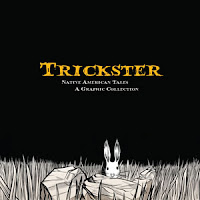
According to editor/production manager/Dad Matt—artist/writer of the undersea adventure Xoc and editor/contributor of the recently released comics anthology of stories inspired by Native American myths, Trickster—Adam drew the pictures first, after which he explained the story to his father, who typed out the words and put the book together.

For his age, Adam presents a surprisingly sophisticated tale. I expected something along the lines of “Hulk, smash!” similar to the way children of his age play with their action figures. It’s the details that stand out and elevate Ant Army above such puerile fare: the aforementioned ghost satellites; the strategies the opposing armies use against one another; the breadth and savagery of the battle; the book’s ability to continually surprise; and its jaw-dropping finish.

My mind reels at what Adam has in store for us in the future. And I cannot wait to find out!

Ant Army gets four anthropo—er, spiders.

Wednesday, September 22, 2010

Thor: Year 1

Saturday, September 4, 2010

To Thee I Web, Finale: Bygones

Previously, our prolific host—in attendance, portraying Spider-Man villain, Green Goblin—recounted the historic wannabe wedding of the iconic Web-Slinger and Mary-Jane Watson at the former home of the New York Mets, Shea Stadium. That event taking place in the bygone eighties,
June 5, 1987, to be precise.


Back in the reserve locker room where I and my fellow character actors had changed, we hustled out of our costumes. There wasn’t any time to bask in the glow of being a part of such a monumental comics event. The heroes and I—the token baddie—had town cars waiting to whisk us off to the reception. The newlyweds were already on their way, having left the field in the limos in which they’d arrived. And, as much as he probably would have preferred, Spidey creator Stan Lee, would not be accompanying us. He disappeared soon after departing the field, but would certainly be reemerging at the wedding reception.

Cool! I can party with Stan Lee, I thought. Yeah, and we’ll be doing Jell-O shots at the bar and break dancing together. The fumes inside the Goblin mask must have made me delusional. Five minutes ago, I couldn’t even talk to the man.

From Flushing, Queens—the borough in which Shea was located—we traveled to the lower west side of Manhattan, where the reception was to take place. Named for the converted train tunnel that the venue occupied, The Tunnel was a sprawling complex, located along the city’s Westside Highway. It was “the” club at the time and, as such, never enjoyed my presence. I’m about as “in” as an outhouse. Visit any trendy bar, restaurant or club and I won’t be there. It’s not that I have an aversion to such places… Well, actually it’s exactly because I do. And I definitely don’t care to hang out with the vacuous, want-to-be-seen types that flock to these spots.

I hadn’t even heard of The Tunnel, but was agog nonetheless. I was still pinching myself (Oh, the bruises I was going to have in the morning) over the fact that I was a member of the Spider-Man wedding party, and now I was clubbing with the Marvel Elite, with the chance to hang out—or hover nearby in awestruck immobility—with Stan Lee. Of course, us characters would have to jump through a few more hoops for the PR people first.

A large private room beneath the main area of the club, was set aside for the Web-Swinging wingding. In a far corner to the left of the bar, a small area containing a couple of comfy couches was draped off in black for the actors to dress and take breaks. The festivities were already underway when we entered. The club proper, though, was deserted. It wasn’t even 8 PM, yet, and any self-respecting clubber wouldn’t think of leaving the house before ten. Otherwise, you wouldn’t get to stand in line, praying to be one of the few selected as worthy of spending twenty bucks to enter.

I was always one of the last ones chosen before any game growing up. It was especially “gratifying” when there was an odd number of kids and I was the one left over, standing on the sidelines, hoping someone else would show, so I could join the kids who didn’t want to play with me in the first place. Why the hell would I want to go through that again?

We made our way through the partying throngs of Marvel Nabobs with our duffel bags in tow. I’m sure the suits wondered who this motley crew of crashers were or why we weren’t ushered through the employee entrance with the rest of the help. Ironically, in a few short minutes, these same haughty honchos would be fawning over us to get their pictures taken like tweens over Justin Bieber.

Unfortunately, with the reception in full swing—so to speak—the only chance I’d have of reconnoitering the area would be during our initial jaunt to the characters’ private section. Because of the limited sight of the costumes, I always liked to scope out the appearance venue in advance to make mental notes of any potentially hazardous zones, i.e. low outcroppings, tables, chairs, columns, essentially anything that someone in a costume might trip over or walk into.

Even when playing Spider-Man—the costume of which offers greater visibility than any of the characters after Cap—I preferred to see where I was going beforehand, especially since the clarity of the vision in the Spidey costume was dependent on the lighting of the target area. In this case, the lighting was horrific: dim ambient illumination under a constant barrage of flashing strobes and sweeping spotlights of various colors, and a swirling fog, the opacity of which went from dense to denser, depending on how many seconds of rest there was between the firing up of the smoke machine. Add that to the cigarette smoke—this was many years before the ban on smoking in clubs—and the air was going to be both visually impenetrable and difficult to breathe, while in costume.


This video of The Tunnel several years after the Spider-Man wedding reception gives you some idea of the atmosphere

As for “potentially hazardous zones,” the entire room was a minefield. A makeshift stage, about two feet high and approximately the size of a Twister playing surface, sat before the bar, which stretched on either side. This was fronted by the only open space on the floor, a small “dance” area the size of the average dental waiting room, around which stood dozens of dainty, cabaret-style, pedestal tables, each sporting a pair of chairs. What little exposed floor there was already shone with spilled drinks.

There was a clear path from the actors’ hidey hole to the nearest end of the bar, but it was bathed in shadow, which wasn’t so much a problem when returning from a break—just follow the light—but terribly treacherous when trying to go on break. If we did manage to get to the curtain concealing the space without tripping or hitting the wall, we then had to find the slit in the drapes which served as its only access point. Anyone who's had to find the opening in a curtain with the lights on may understand the challenge we faced doing so in complete darkness and while masked.

Had any of us in the wedding party stopped to think about this, we would have probably sent our regrets and a check. But as invited guests, the heroes and Green Goblin were expected to act as such, which meant partying with the corporate big-wigs. So as soon as we had our costumes on, we hit the dance floor. Okay, we gingerly followed Captain America, making our inability to see where we were going look like heroic—or nefarious, in my case—posturing. Spider-Man and MJ were there to meet us, having recently arrived to a cadre of press photographers, entering like stars at a movie premiere.

Cap strode to the nearest table and dragged up the woman seated there to join him. Firestar just had to appear. In no time there was a bevy of tongue-wagging execs encircling her like prepubescents vying for the latest issue of National Geographic (You young ’uns may want to ask an older gent to explain that last allusion). The remaining trio—Hulk, Iceman and me, Gobby—the ones who could barely see each other, didn’t worry about partners. Hell, we wouldn’t have seen them anyway. We shook our booties to beat the band. A more surreal tableau had not been witnessed by mankind since Batman introduced the Batusi on his TV series in the 60s. Captain America, The Incredible Hulk, Firestar, Iceman and The Green Goblin boogying to George Michael’s I Want Your Sex and The Bangles’s Walk Like an Egyptian.

I found it most freeing. No canvassing the floor for someone with which to dance; no fear of rejection; no self-consciousness over how good I was. Quite the contrary; I whooped it up like a drunk divorcée. Had there been a lampshade, I’d have been wearing it. And because I was an evil-doer, I could flirt without fear of recriminations. Of course, I couldn’t exactly see who I was speaking with—although I could discern enough to distinguish the guys from the gals—but many a lap got sat on and many a hug was given.

Soon, I realized that I needed a break. I was overheating and sweating profusely. What little I could see before was now clouded by the sweat cascading down my face, mingling with the water already dripping from my eyes from the fumes of the mask’s glue. There was no light-headedness, but experience told me that I was running on adrenaline and needed to stop. But where was everyone? I scanned the room for some hint of primary or garish color. This was a New York City nightclub where black is de rigueur, so a splash of anything other would be a sure sign of a hero. It’s not like I could just stop, either. The show doesn’t end when there’s a flubbed line or missed cue. I had to continue cackling and interacting as Gobby, while I worked my way back to the dance floor. From there, I could tackle the walk to the rest area.

Suddenly, a familiar voice… “There you are Green Goblin!” It was Barbara, come to check on me. I nearly kissed her, as she escorted me to safety.

This recently released Mary-Jane commemorative Barbie celebrates the historic wedding of the titular model to the iconic super-arachnid

When I finally removed the mask in the rest area, I was dizzy and my face was dripping. I needed hydration… badly. Unfortunately, no one thought to provide water to us. I guess the costumed characters were the only ones who got that memo. Well, if there was one thing you learned doing costumed appearances, it was to take matters into your own hands, whether that meant traveling with your own supply of Sharpies—the autographing implement of choice—mastering the bodily contortions it took to get into costume without aid, or purchasing thermal underwear to withstand the unforgiving 20-below winters of Winnipeg. So Captain America—who had by this time dried out—redonned his mask and, in true heroic fashion, whipped the black curtain aside and strode forth to save his brethren. And boy, did he ever. In a matter of moments, he returned carrying a case of mineral water. I chuckle whenever I envision the scene that took place at the bar. I mean, who’s going to refuse Captain America?

It was around this time that one of us asked, “Uh… where’s The Hulk?”

Shit, we’d left him on the dance floor by his lonesome! It had been well over the recommended twenty minutes, and that’s when the character’s movement is limited to shaking hands, not dancing! It had more than an hour, since he went onto the floor. Just as Captain America was donning his mask to make another daring rescue, the drapes parted and the Hulk was led in by a Marvel employee, who worked on the same floor where the personal appearance department was located. We barely had enough time to remove his head and unhook his torso when the Hulk collapsed onto a couch. Gary, the actor within, was wan and soaked. Even in the dim lighting, steam was visibly rising from the chest cavity. He guzzled a half dozen 12-oz. bottles of mineral water in the blink of an eye and appeared as though he was ready to throw back six more when the head of the publicity department bustled in.

“What are you doing back here? They’re about to cut the cake!” she admonished.

We glad-handed Miss Publicity—who was sure to be there when we had to return to the floor, but was conveniently absent when we needed a rest—then told Gary to stay put, after she had departed. We’d handle the situation. I don’t think he could’ve moved again so soon anyway.

A modest, three-tiered cake—unworthy of Duff Goldman’s dog—was wheeled out on a cart before the stage. A Spider-Man action figure and custom-sculpted MJ-as-bride figure topped the confection. I’m not even certain there even was a cake-cutting. After all, the bride would have a hard time getting it into her web-swinging hubby’s mouth, and no one wanted to risk staining the costume or MJ’s Willi Smith–designed gown. The ritual was purely ceremonial and was followed by more dancing and mingling.

It wasn’t long before additional speechifying. The event was finally winding down and it was time for the “Thank-yous.” The characters—this time with The Hulk who had sufficiently rested by then—gathered behind then Editor-in-Chief Jim Shooter and Stan Lee onstage. Shooter spoke more about the importance of this “momentous event and brown-nos—er, thanked the appropriate parties.” But apparently not enough. He was canned before the end of the year, replaced by Tom DeFalco.

Marvel’s 20th anniversary was the cover story of the premiere issue of Comics Scene in 1982 which featured Lee and Shooter

Lee followed. I hadn’t seen my idol all night. Of course, at times he may have been standing right next to me, hobnobbing along with the other heroes. I just couldn’t see him. The consummate showman, he enthused with his signature alliterative and superlative remarks before bringing the evening to a close with a rousing “Excelsior!” After a bevy of photographs were taken, he and Shooter left the stage whilst heroes and villain alike remained to shake hands with the departing guests.

As we disbanded, a strange thing occurred. From the stage I spotted an acting classmate of mine from Boston University, one who had been “axed” after her sophomore year, having not made the yearly cut. What was she doing here? Was she affiliated with Marvel or one of its sister companies? I hadn’t realized at the time that Marvel’s exclusivity to the lower room had expired and had since been opened to the public. The Tunnel being the hot club at the time, and it being Friday night, she was simply out partying.

That's Lisa in the middle wearing the "Williams" sweatshirt

“Hello, Lisa!” I screeched in my best Green Goblin cackle.

“Steve Vrattos . . . Is that you in there?” she answered, unfazed in her southern drawl.

How the f*** did she know it was me? I nodded mutely in response as she disappeared into the crowd. I would loved to have caught up with her. She was one of the funniest woman I’d ever met, sharp-witted and cute to boot, with a quirky Meg Ryan-esque smile and lovely bedroom eyes. We were friendly toward one another in college, but shared few classes together, so never had the chance to get close. It would be nice to actually know someone in the Big Apple. I figured on checking out the club for her as soon as I was done with my gig.

Another half hour of mingling and we got the “OK” to change back into our civilian identities. I looked for Lisa afterward to no avail. No surprise. The place was packed. So I collected my bag from the back room downstairs and headed toward the exit.

Ah, but my tale did not end there. Midway up the stairs, I was interrupted by a shout from below.

“Hey, Green Goblin!”

It was an admirer of mine from the Marvel offices; a girl who would have been adorable if not for an unfortunate off-putting hirsute chin. She wasn’t sporting a Van Dyke, by any means, just several scraggly intertwining whiskers like the hairs that sprout from the ears of old men (I’m sorry… I’m shallow… I just couldn’t get passed it!). She’d been threatening to get a picture of me out of costume all week. I was less than willing to oblige, visions of her stroking her chin hairs while gazing upon my photo like Ming the Merciless contemplating Flash Gordon’s demise filled my mind. She had her camera at the ready and me in her sights. I was doomed.

Flash!

A Cheshire grin spread across her face as she lowered her camera triumphantly. But it was no bigger than the one on my face, when I noticed that her camera flashed behind her; she had taken the picture backwards, essentially into her face. She must have been schnockered not to have noticed the flash in her eyes.

I made another cursory scan of the club for Lisa before I left. But who was I kidding. She wasn’t the slightest bit interested in catching up with me. It’s not as if she was revisiting the character area to see me again. Just another “small-world” moment in a city of ten million.

I also never chanced to see Stan again that evening. He was long gone by the time I was done Green Goblin-ing. No matter. I’d met my childhood idol, who proved to be as wonderful as I’d imagined. What’s more, I was in the wedding party at Spider-Man’s nuptuals. The only villain invited, I might add.

Good thing, the Web-Swinger doesn’t hold a grudge. I did kill his previous girlfriend, after all.