Monday, October 10, 2011

He's at It Again

Writer/artist—and savvy promoter (hence the outfit)—Adam Dembicki displays his newest creations

That wee wunderkind of storytelling, Adam Dembicki, debuted not one, but two new mini comics at the recent 2011 Small Press Expo or SPX as it is more commonly called. The two-day comic-book bender takes place every fall—next year’s event is Sept. 14–15; MARK YOUR CALENDARS!—at the Bethesda Marriot in Maryland and celebrates the li’l guys of graphic novels. And few get much li’l-er than Adam.

Only five at last year’s show, the junior genius presented his first title, Ant Army, an eerie, Twilight Zone-esque mini that is diabolical in its knack for leaving readers unsettled. My ever-Faithful Bloglodytes will remember I gave an esteemed four spiders to Master Dembicki’s terrifying tale (seeAnt Army by Adam Dembicki”).

I was looking forward to seeing my wee pal and his equally talented father, Matt, not only in anticipation of their latest creations, but also because I wanted to give Adam a copy of Rex Riders, the book I’d edited, layed-out, typeset and served as design consultant during my hiatus from the blog last spring (see “REX RIDERS or How I Spent My Recent Sabbatical”). The smile he displayed when he received the book was recompense enough, but he gave me a copy each of his dual debut.

I was thrilled.

As in previous years, I was representing Fanfare/Ponent Mon, publisher of only the finest translated graphic novels from across the globe. The booth was situated close to Adam and his dad’s location, a mere fifteen feet behind me and across the aisle to my left. As attendees came by to check out my wares, I was sure to alert them to the six-year-old creator in the house upon their departure, pointing in Adam’s direction.

At the end of that first day, I bumped into Matt. He was incredulous to the amount of traffic Adam had received. I mentioned that I plugged his son at every opportunity throughout the day, and he was understandably humbled by my magnanimous gesture. The next morning Matt and Adam met me outside the convention hall before it opened where Adam presented me with a piece of original artwork he’d drawn the evening before as a thank you for my help.

The cool artwork gifted to me by creator Adam Dembicki

And it is with full disclosure that I tell you this, and that the young Dembecki’s gift in no way, shape or form has influenced my reviews of his latest masterpieces (ahem).

Jailbreak and The Never-Ending War, are slimmer—and in the case of the latter, black-and-white—yet no less compelling than Ant Army.

His latest efforts, Jailbreak and The Never-Ending War, are slimmer—and in the case of the latter, black-and-white—but no less compelling.

On the surface, Jailbreak is nothing more than just that: a story of a prison escape by a quartet of cons. It’s a more straightforward and furiously-paced tale—akin to that of The Fast and the Furious movie franchise—that opens with the prisoners making good their escape. A frenzied chase, complete with helicopters, ensues with little doubt as to the outcome.

The art further suggests to the story’s black-and-white result, and given a less-proven wordsmith, I’d expect no less. But Adam is nothing else if not a rascally writer, and he leaves his audience on the final page with the disturbing notion that the ending is not as cut-and-dried as it would seem, made all the more poignant by the simplicity of the story and stark art.

The Never-Ending War is more epic in subject matter and befittingly presented in full color; a galactic battle pitting Earth against Mars, which opens many decades into the struggle with the advantage having oscillated between the two combatants. Is the the final conflict? Will a victor finally emerge? That would be telling and would ruin My Faithful Bloglodytes’ enjoyment of Adam’s classic statement on war.


Adam talks about Jailbreak, The Never-Ending War and Star Wars with Joe and Rusty at SPX 2011

A mere six years of age and the Master Dembicki displays a tremendous depth and understanding about war that puts to shame that of the world’s leaders. Earth and Mars could just as easily be the United States and the Taliban or Israel and Palestine or any warring factions past, present or future. And the kid Kipling’s prescience at such a young age should be a wake-up call to us all.

Both Jailbreak and The Never-Ending War get four spiders.

Saturday, September 24, 2011

Maiden Voyage

Beautiful Halifax, Nova Scotia... not a cloud in the sky... yet!

Throughout my decade as Spider-Man et al, the preponderance of appearances were humble affairs. Short one-day signings at Mom and Pop’s, comic shops, and local chains of grocery, drug and convenience stores were the norm with occasional notable exceptions. Still, though these smaller affairs may not have had the gravitas of a parade, celebrity sighting or television coverage, they were no less special; the children were just as endearing and full of surprises, the locals were as warm and friendly as ever, and I was always excited and often amazed at discovering parts of the United States and Canada that I would never have been exposed to if not for my Web-Swinging adventures.

But every once in a while an appearance would become something to write home about after the actual wearing of the red-and-blue; the deed is done; the kids are happily sleeping with their autographed comics clutched in their wee mitts after a grueling day of braving an encounter with their hero; the parents are slumped on the couch near comatose after shepherding said young ’uns to meet their super-powered idols; and I’m usually either on the first plane out of Dodge or back at my hotel facing another lonely night eating at the bar, then watching network television or basic cable—depending on the amenities of the hotel/motel at which I’m staying—until my flight the next morning… usually.

The anecdote I’m about to relate in my customary inimitable fashion begins as so many of my escapades, or should I say ICE-capades, often do in the wilds of our Canadian brethren. But although the weather is a contributing factor to this masterful missive, the playful vagaries of Mother Nature merely provide the backdrop to our tale.
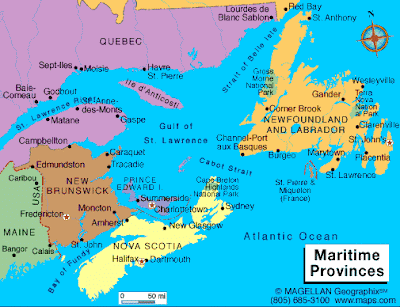
It all started in Halifax, Nova Scotia, one of the three provinces that make up the Maritimes. Other than a stopover—during which I didn’t even change planes—on my way to St. John’s, located in another of the provincial trio, Newfoundland, I’d yet to pay a proper visit to the island whence my maternal grandfather hailed. This fact alone had my anticipation precipitously high, even though I didn’t have relatives there—at least none of which I knew; neither Papa nor my mom spoke of any. Still, Canada was in my bones, and despite the weather’s mood swings during some past gigs, I’d always had a good time, regardless of what part of the country I was in.

If nothing else, Canada was beautiful; a treat to take in, even if just traveling from airport to hotel to convenience store and back; which was the case during this trip, a set of appearances at area convenience stores, at which Marvel comics were sold.

The gig was put together through the company’s mass market circulation department. As opposed to the specialty division through which comics are delivered on a non-returnable basis at a greater discount—most often to funny book purveyors—this segment of the business delivered titles through major magazine distributors to everyone else from Walmart to 7-11, anywhere you’d find a periodicals section or spinner rack among other fare.

Boy: Wow! Wonder Woman!
Man: Hmm... Wonder Woman...

These co-op appearances—partially funded by Marvel—were a way for the distributors to increase comic sales and attention, and foment good will with their clients. They’d shoe-horn as many shops as possible into Spider-Man’s visit to maximize the bang for their buck and cover as large an area as they could. Most of the visits were no more than an hour long and unfortunately scarcely attended; the individual outlets may have been alerted by their distribution reps about Spidey’s impending swing-by—possibly given a poster to put in the window—but not much else was ever done on the part of the business owners to promote the event.

As a result, these stops were invariably filled with patrons lamenting a missed opportunity to bring their children or grandchildren—whatever the case may be—to meet Marvel’s most-famous hero, and receive a free comic and autograph. I’d always offer a signed book anyway, and occasionally they were gratefully taken. But more often, they were politely declined, probably because the abstainer didn’t want to face the disappointment of their little ’uns upon hearing that they’d missed meeting the Web-Spinning idol o’ millions.

Comic-Geek Porn

Even with such tepid results, both reps and merchants alike were always thrilled with Spider-Man having visited their shops, which at the end of the day is the most important thing.

The comics were provided by Marvel through the distributors who were hosting the gigs. The freebies were recent returns—the funny book equivalent of second-run movies—that would have been stripped of their covers and destroyed anyway. Ideally, Spider-Man titles would be on offer, and with a plethora of different Webhead titles from which to choose—Spider-Man; Amazing Spider-Man; Spectacular Spider-Man; Web of Spider-Man; Spider-Man Unlimited; Marvel Tales (featuring Spider-Man)—this should not have been a difficult request to service.
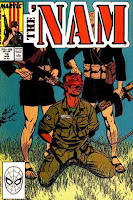
But every now and then, I’d arrive to an appearance to find a box containing a mélange of Marvel comics, everything from Fantastic Four to The ’Nam—a title featuring war stories inspired by the Vietnam conflict—not exactly the sort of fare Spider-Man should be autographing never mind giving to young Johnny or wee Lucy. So I’d cull as many Spidey books from the crate as I could find and put them on top, hoping I wouldn’t run out by the end of the day.

There were few moments more awkward than Spider-Man offering his signature on an issue of Incredible Hulk or Iron Man or (yikes!) The Punisher. The children were ever beaming; the autographed souvenir could have been a used tissue—they didn’t care; they met Spider-Man!—but the adults… Gone was any hint of appreciation that had arisen when the freebie was offered seconds before, replaced by looks that ranged from confusion to disappointment to anger and disgust.

“Don’t you have one with Spider-Man on it?” Mom or Dad would ask with more than a trace of bile in their throat when the espied the book over their progeny’s shoulder.
“Sorry… we ran out…,” I’d meekly reply, my heart dropping from my ribcage.

Sometimes, I’d tried to lighten the mood.

“Would you believe, they flew out of my hands like hot cakes?” I’d quip. “I gotta say, I’m as surprised as you, and more than a bit humbled. Who’da thunk, after all the disparaging press The Daily Bugle gives me, I’d be so popular?”

“You should have Spider-Man funny books,” they’d spit back.

I may as well have been talking to a phone jack for all the good my attempt at levity was doing.

In several instances, the ephemeral superhero hodgepodge included DC titles! It was one thing to give out a Marvel comic of a hero other than the one I was portraying; a-far-nother thing offering one of the Distinguished Competition’s. That I would not do. In one instance a mix-up at the circulation warehouse resulted in nothing but DC books being delivered to a gig, leaving me without any comics for the fans.

Comic great Alan Davis provided the cover art—though uncredited—for the nifty, exclusive Personal Appearance trading cards. The back art, however, appears to have been done by another fan favorite, Mark Bagley

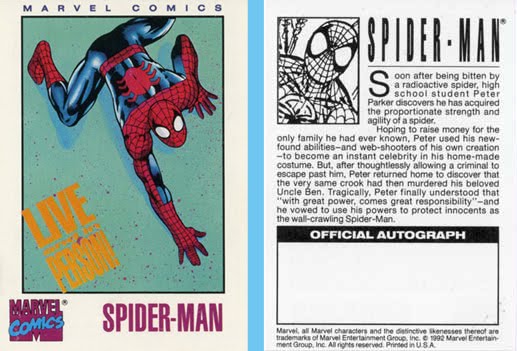
Fortunately, the Personal Appearance Department had created exclusive trading cards that actors were expected to always have handy in case of just such an emergency. There were two designs, both delineated by artist Alan Davis. One featured Spidey; the other a group shot of Hulk, Captain America and Wolverine, which sufficed gigs other than those of the wondrous Web-Swinger. The backs of the cards sported a recap of Spider-Man’s origin in the former case and some generic Marvel superhero hoopla in the latter, and each provided a blank box in which the hero du jour could ink their respective John Hancocks.

Now the comics delivered to Halifax put me in a bit of a pickle. First, there was only a single book in the shipment; a couple hundred copies of the same comic. This isn’t necessarily a bad thing; everybody—parents and children alike—get the same freebie, so there wouldn’t be any consternation over say, one kid getting an issue of Spider-Man Unlimited, which is double-size, while their sibling gets a copy of Amazing Spider-Man, which is regular-size; or little sister getting Spectacular Spider-Man, guest starring Wolverine, and big brother receiving Web of Spider-Man, the “all Aunt May” issue. Believe me, it wasn’t unusual for a parent to ask if I have the same comic to give every child in a party so “they won’t fight,” an attitude I was more than familiar with given the animosity and tension growing up with my two older sisters.

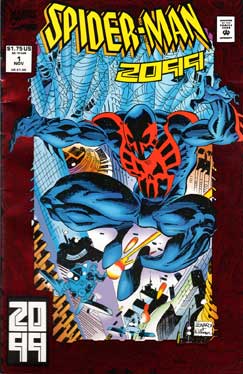
And technically, the multiple in question was a Spidey comic. But it was Spider-Man 2099!

In 1992, Marvel launched the 2099 Universe, a series of titles that re-imagined their stalwart stars a hundred years in the future—okay, a hundred seven years in the future, but 2099 has a catchier ring to it than 2092. Spider-Man 2099 was the first of the line released, and I think it was the best of the bunch. Writer Peter David concocted a Spidey of tomorrow that zigged, wherever the present-day Web-Slinger zagged; totally re-inventing the character while staying true to him. As a special marketing gimmick, each premier issue sported a metallic-ink border. In Webhead’s case, artist Rick Leonardi’s gorgeous art was framed in a Hot Wheels-eque red. The result was utterly cool.

Most of the 2099 titles were merely futuristic takes on the same old, same old, all except Spider-Man’s re-imagining... and Ghost Rider’s, which was like 2001: A Space Odyssey meets The Exorcist
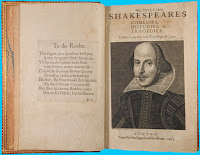
And the Curtis Distribution rep was not shy about showing his excitement over having the book to give away. A number one issue of the world’s most-popular superhero with a snazzy ultra-awesome cover? He was beside himself and couldn’t stop talking about how lucky he was to have received such an honor. You’d think it was an original Shakespeare’s First Folio he was passing out.

Sure, the design was incredibly attractive and the cachet of getting a premier issue gratis was mind-boggling. But here I was dispersing comics of some futuristic doppleganger who shared Spidey’s name only, but looked nothing like the titular Webhead. It was like winning the lottery, but then finding out that the prize was a-dollar-a-year-for-a-million-years!

Since 80% or more of all appearances were Spider-Man gigs, the department consolidated the most popular of the remaining characters that made appearances on the other of the two designs. Ye Olde Webhead is featured on it as well, because even those events where there are other heroes, Spidey often is too!

Thank goodness, for the trading cards. Each fan received both a comic and a card, circumnavigating any potential chagrin from persnickity caretakers over not getting a Spider-Man book with the Web-Slinger of their youth in the pages therein.

I should not have fretted so. Sure, there were the occasional queries regarding the strange-looking Web-Spinner gracing the cover of the handouts, but they were of the curious type, not the what-the-Hell-is-this-you’re-giving-me kind.

Featured in Marvel Age magazine at the time of the debut of the Marvel 2099 Universe, this delightful spoof was delineated by the late great Rusty Haller, former header artist for Heroes in My Closet

The circulation rep and I visited four stores throughout the day, two before lunch and two thereafter. The weather was gloriously autumnal: sunny and crisp; not a cloud in the sky. Gee, where have I read this before? I can hear my Faithful Bloglodytes’ cynical thoughts already, and they would be justified.

The perfect atmospheric conditions persisted into the early evening hours. I was returned to the hotel by a rep, giddily happy over a successful promotion, and proceeded to undertake the day-is-done-but-not-leaving-until-morning appearance routine: shower; dinner at the hotel restaurant; TV; reading; sleep. As I headed through the lobby for the eatery, I noticed a drastic change in the weather outside the glass-door entrance. The sky had turned an inhospitable gray and snow was falling; big, Idaho potato-sized lumps that had already covered the landscape.

Perhaps, it was the magic of the first snowfall of the season or maybe it was the Canuck in me, but after a satisfying repast, I decided to venture across the two lane road that fronted the lodging—already sporting a foot of frozen, fluffy goodness—and pay a visit to the pub situated parallel on the opposite side. I am neither a rabble rouser, nor a barfly, but I do enjoy people watching and soaking in the local atmosphere wherever I am. I figured a couple of beers and an hour later, I’d return to my room.

Yeah, right!

As I sat at the bar, nursing my heavenly Canadian ale—Damn they serve delicious beer in the Great White North!—I was soon surrounded by a group of four gentlemen. Or blokes may be a better term, as they all sported British accents. Clad in black T-shirts, jeans and leather boots that looked as if they’d shopped in the Sons of Anarchy section of the FX studio store, their down-to-earth demeanor and friendliness reminded me of stage techies, those unsung behind-the-scenes members of a show responsible for everything from lighting to props.

Turns out I wasn’t too far off the mark with my assessment. I was immediately ingratiated into their cabal, and they soon revealed themselves as the road crew for the world-famous heavy metal band, Iron Maiden. Amazingly, of the quartet—and there may have been more, but given my high level of inebriation, it’s a wonder I can recall the entire trip!—I actually remember Mark Berryman and Chris Lang, and Googling each confirms their association with Iron Maiden. At the time, there was a woman, named Bonnie Berryman, in Marvel’s licensing division, which could explain why I can still dredge up Mark’s name. As for Chris, his surname is the same as the superhero Ant Man—Scott Lang—who took up the mantle after Henry Pym, but has subsequently died in action.
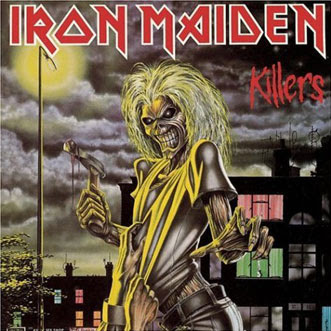
Seems the group had flown into Halifax earlier in the day to set up for a scheduled performance by the group the following evening. But the fast-moving blizzard that had now totally immersed the town had forced the concert’s cancellation and the roadies were taking full advantage of their unexpected night off.
They lost me at “blizzard.” Sure, the flakes were descending in larger clumps and at a faster rate than your normal dusting—the nostalgic chords of the Vince Guaraldi Trio’s “Skating” from A Charlie Brown Christmas certainly would’ve understated the delightful downfall that now descended upon Nova Scotia. But blizzard?!! It was pumpkin-picking picturesque merely a couple of hours ago!

As if to spit in the eye of my skepticism, I noticed for the first time the customers entering the pub; humanoid Frosted Mini-Wheats topped with Cool Whip emerging from a wall of white. My initial thoughts of Here we go again were immediately trumped by There’s no way, I’ll be flying out of this in the morning. So I embraced the serendipity of my Maiden mates and started settling in for the evening, dashing my previously conceived self-imposed two-drink limit.

Good thing, too. The moment I told them the reason this Yankee was in Her Majesty’s North American Commonwealth, they nearly spilled their pints! Here these ebullient chaps work with one of the most exalted bands of the genre—internationally renown pioneers of British heavy metal, having sold more than 85 million albums (and counting) around the world, with more than two dozen different awards and distinguished accolades to their credit—and they devolve to hysterical fanboys when they meet Spider-Man. I felt guilty that I wasn’t as equally crazed about Iron Maiden. Can you imagine the scene in the bar then? The lot of us would be jumping and screaming like the female fans in those old concert videos of the Beatles from the early 60s.

Iron Maiden as they appeared in their heyday

And what better way to show their love and admiration for ye olde Web-Slinger than keeping his pint glass ever full of amber goodness. It was like the pitcher that Jesus used to slake the thirst of the masses. The glass had barely hit the counter from my enjoying the final swig of a round when miraculously it was full again, suds foaming down to immerse the Labatt’s coaster which was fast deteriorating under the stress.

Thank goodness, the English don’t cotton to the American frat-boy mentality of doing shots. They stay straight and true on the hops highway—copious, staggering amounts to be sure—but blessedly without pit stops of tequila, Jägermeister, Jack Daniel’s or some other evil liquid that will ensure an evening spent bowing to the porcelain god and one Brobdingnagian hangover.
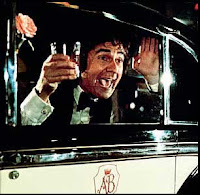
As it was, I was more than toasted; I was one butter knife short of finagling out the charring slice! The number of Iron Maiden roadies went from four to eight to twelve; a Mormon Tabernacle Choir of Arthurs; bloody dear lads all who loved the idea of partying with Spider-Man. I knew I had to get out of there while I still could. I profusely thanked my brewery benefactors, and they in turn insisted on a final round before I left. How could I refuse? I was Dumbledore forcing down the undrinkable potion from the bowl that contained Salazar Slytherin’s Locket in Harry Potter and the Half-Blood Prince.

Unfortunately, Harry was not their to help me out of the pub and back to the hotel. The snow was five feet high—I bullshit you not—and other than a path to the pub entrance and one lane of the road that ran betwixt it and my goal, not a flake was shoveled. I waded through like I was in a giant children’s ball pit, only the balls were heavier and covered in Velcro. I stumbled out onto the plowed street, hoping that the entrance to the hotel parking lot had been cleaned as well. No such luck. So I attacked the second stage of this Winter Wonderland from Hell.

My only solace was the certainty that my insanely early flight would be canceled and I could reschedule for a later one; departing when I was less hung over… sometime in spring perhaps!

I finally made it to the hotel looking like I’d been dipped in ice water and rolled in coconut. I teetered over to the front desk, drunk and half-frozen. I must have looked a sight, but the receptionist didn’t seem to notice.

“What are the chances of my early-morning flight taking off on time?” I slurred, my overreaching sense of responsibility forcing me to ask, despite the logical part of my brain screaming You just spent a half hour struggling through fifty-yards of snow that would normally have taken a minute to walk, you dodo! There ain’t nothing taking off in this weather. Even the polar bears have called in sick!

“Oh, I’m sure they’ll be no delays. But let me check,” she answered perkily. I didn’t want perky; I wanted complicity. A veil of gloom began to descend over me. She’s joking, right? This is her way of getting back at having drawn the late-schedule short straw on a Saturday night.

“Everything’s on time!” she chirped.

If looks could kill, she would have gone up in a ball of flame at that moment. I returned with the type of smile I imagine Ted Bundy gave his victims right before the deed. “In that case,” I replied, my voice smooth as velvet, “I’d like a wake-up call for, say”—I looked at the clock hanging behind the reject from Disney World’s “It’s a Small World” ride—“fifteen minutes from now.”

Okay, it wasn’t quite a quarter of an hour. It was ninety minutes, leaving just enough time to dress, pack and shower before the cab arrived to take me to the airport. Showering was essential, not leastwise so I wouldn’t smell like a hobo during the flight. It would also aid in getting a few brain cells rubbing together to spark the firing of a synapse or two, so I could manage enough rudimentary functions to get me onto the plane.

Two hours later, I was still drunk when I tumbled into my aisle seat. The snowfall had stopped and there wasn’t a hint of a breeze, so I was hopeful the take-off would be smooth. My stomach was a piece of Dresden China and the slightest lurch was all it would take for that “one last drink before you go and several before it” to project from my mouth. I checked the storage pouch of the seat in front of me for the requisite barf bag, placing it at the fore in case I needed it quickly.
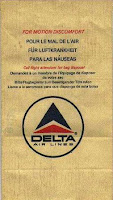
No need. The plane sped off the tarmac without so much as a hiccup, not even the usual stomach-lurching drop that occurs during the ascent—God, I hate that!

As mentioned, I was situated on the aisle of a three-seat row. A businessman was at the window and the middle was thankfully unoccupied. Regardless of how thorough the shower and teeth-brushing, when one is as sufficiently pickled as I was, no amount of cleansing can fully mask alcohol inevitably seeping through the pores and out one’s parched maw. Plus, there was still the possibility that turbulence might force my using the vomit sack, and it would be embarrassing enough with the man at the window, never mind someone rubbing up against me at the time of “upheaval” (although, it would pretty much guarantee me the armrest…).
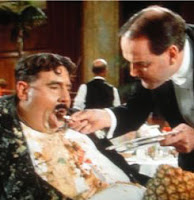
I was never more happy to hear the captain speak than when he announced that the route into the Big Apple was clear and no problems were expected. I shut my eyes and grabbed what little sleep I could during the hour-long flight, only to be awoken by the pilot updating us on the situation heading into La Guardia airport; that being unexpected rough winds! My stomach was far from settled, one “wafer-thin mint” away from exploding. I white-knuckled the armrests and braced myself.
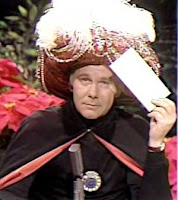
True to the pilot’s words, the plane began an aerial ballet as we made our northern approach over the East River, bobbing and swaying like a Tilt-A-Whirl. Before you could say “Houston, we have a problem,” I nonchalantly picked up the puke pouch, blew it open like Carnac and lost it! About two pints of beer filled the bag—not a speck of food. I quietly issued an “Excuse me,” but the businessman acted as if nothing had transpired.

I instantly felt better, casually folding closed the containment vessel and placing it on the seat beside me. The instruction on the bag instructs the vomiter to hand it off to the flight attendant upon deplaning, but that wasn’t going happen. Like I wanted to become the stuff of some Air Canada employee’s memoirs!

Despite the Iron Maiden road crew’s generous offer for me to come looking for them at wherever the band may be performing the next time they did New York City, and they’d get me a backstage pass, it never came to fruition. The one time I noticed the Heavy Metal group was in town, as luck would have it, I was out doing a Spider-Man gig. Hell, had I seen a movie like Rock Star during that time, I would have followed the band cross-country!

Still, Mark Berryman, Chris Lang et al, were great blokes leaving me with one of my fondest Spider-Man memories, which Chris summed up quite nicely that fateful evening in Halifax. ’Twas the wee small hours of the morning, when a very inebriated Mr. Lang draped himself over my shoulders—as bar mates often do when the hour is late and the consumption is high. “What are the chances…” he began, channeling Dudley Moore. “What are the chances of Spider-Man and the road crew from Iron Maiden meeting up in a bar in Halifax, Nova Scotia, in the middle of a blizzard?”

Actually… quite good!

Sunday, August 21, 2011

I Slept with Stan Lee, Part II: Car Service

Apparently Drew Carey wasn't available

In the last exciting installment our intrepid hero, still reeling from a heart-breaking first encounter with his hero Stan Lee at the live performance of Spider-Man’s wedding to Mary-Jane at Shea Stadium—at which he played the nefarious Green Goblin—eighteen months prior, has been called upon to join The Man on
AM Cleveland in Ohio in front of a live audience at a shopping mall. After weathering a humiliating entrance in a glass elevator, numerous snide remarks from the morning chat-fest’s host, Scott Newell, and falling victim to his own jitters, Vroom! has been ask to join Newell in the audience…

Given my earlier entrance, which was greeted with faux-playful derogatory comments by AM Cleveland host Scott Newell, I wasn’t about to once again navigate the maze of equipment, union members and security clogging up the wings. I hated when my actions appeared like any guy in a Spider-Man suit. I was Spidey, dammit! (with due respect to Eddie Murphy) and I didn’t want to give Newell the satisfaction of another derogatory remark about how uncharacteristically I was performing. In fact, I cut him off in the midst of just such a comment, as a leapt over the shrubbery, which fronted the length of the stage—extending a good yard out—landing a few feet from his side.

Exit... Leaping over the shrubbery... Stage left...
Stage right even...

It was a dumb move: unrehearsed, without any knowledge of what lay before me, or how far I had to jump. As I’ve mentioned in previous posts, the suit removes the wearer’s depth perception. It was literally a leap of faith. Those who know me from school could verify that when it came to athletics, I made a great water boy. Still, I wasn’t what one would describe as unwieldy and four years of intensive study in both physical and spiritual self-awareness—as an actor, the mind and body are one’s instrument—gave me enough confidence to make the move.

I extended my legs to my toes, every muscle alert for the moment the phalanges hit the ground; then allowed my weight to fall through me as a collapsed to the floor before springing up with a casual flourish, a visual snub that actually got a rise out of Newell’s eyebrows. You can hear Stan cackle with delight either from the host’s or an audience member’s reaction as I sidle toward Newell and he composes himself.

“What's the matter, Scott? Spider got your tongue?”

The answer to Newell’s subsequent query as to my greatest predicament was a reference to Amazing Spider-Man #33, the final chapter of an epic trilogy, wherein the wondrous Wall-Crawler, in battling the nefarious Doctor Octopus, finds himself pinned beneath tons of machinery under the Hudson River while the famous tributary’s waters quickly rise around him. In his webbed hand, Spidey holds a serum that will save his Aunt May, who lays dying in a hospital bed nearby. It is considered one of the greatest Spider-Man stories ever told and its notoriety was such, that even though I’d never read the saga myself, I knew of it.

Unfortunately, my lackluster inflection and ponderous palaver—a product of nerves and inexperience with portraying Webhead in front of an audience and on camera—made my answer sound more like a child’s when asked what they did on their summer vacation, stammers and mumbles abounding. My subsequent response to Newell’s comment about my fighting crime while in Cleveland, however, was handled more adroitly. Perhaps I was settling into the experience, but I was also more familiar with the line of inquiry. It was one often asked wherever I visited.

As I returned to my spot at Stan’s side, deciding to forego the route I took to get off the stage—I’m no Dwight Stone and I was fairly sure Spider-Man Fosbury Flopping the ficuses would not have been construed as a signature move on Spidey’s part—Newell brought out the big guns. Gone were the prerequisite feel-good questions lobbed over the net to foment a false sense of security in the guest. It was now time to slam home the controversial queries, the interrogation that was going to garner Newell his Pulitzer Prize in hard-hitting journalism.

At the time of the show, the Distinguished Competition was in the midst of a marketing campaign that was creating quite the brou-hah-ha surrounding a storyline in Batman. “A Death in the Family” was a four-part saga pitting the Dark Knight against The Joker. What keeps this confrontation with the Clown Prince of Evil different from the hundreds that had come before was the outcome—life or death for Batman’s young sidekick Robin—decided upon by the public via a phone-in vote (… to save Robin press one… to kill Robin press two… to hear these instruction in Spanish move to Mexico!).

The covers to the notorious “Death in the Family” storyline. Can you guess in which issue Robin bites it?

Jason Todd’s death was a foregone conclusion. As with most phone-in campaigns, callers had the opportunity to vote as often as they wanted, and human nature, being what it is, weighed heavily in the Joker’s favor. Think about it. Those good Samaritans or rare Jason Todd fans make one call, and hang up, warm in the knowledge that they’ve done their due diligence. The death mongers, however, call until their fingers are bleeding nubs, stuck in the holes of their rotary phone. There was no way they were going to let that little bastard survive, regardless of the surcharge per call to ensure his swimming with the fishies, albeit in this case, he was strapped to a bomb and blown up! Consider it this way: when people are pleased with something, they rarely make the effort to show their satisfaction with a phone call or letter; whereas displeasure is trumpeted loudly and often. There’s a lot of truth behind the adage, The squeaky wheel gets the grease.

Comics were still viewed as entertainment for children and the promotion was decried as being twisted and sick and inappropriate for kiddies. Never mind that concerned parents should be monitoring what their children read—and who they are calling, for that matter—and the mean age of comic readers, even back then, was in the upper teens/early twenties, the press had a field day and DC Comics laughed all the way to the bank, selling oodles of copies of the series. But the subject of killing a beloved hero—in this case a teen one—became the topic du jour.

Batman looks the other way while the calls demanding his sidekick’s execution flood the phone lines

As with most controversies created by the media, this one was based on fallacies and fed off ignorance. Killing heroes, even young ones, in comics was nothing new. Marvel got rid of Captain America’s teen sidekick, Bucky, a score prior. And contrary to the inaccurate reports of the press—shocking, I know—this was not Dick Grayson, the Robin familiar to the masses, most notably played by Burt Ward in the popular 60’s Batman television camp-fest. Grayson, all-growed up after nearly a half century of wearing the tight green shorts and elf slippers, finally retired to become Nightwing. The new Robin was Jason Todd, a replacement much-reviled by the fans. Apparently, Todd was an obnoxious brat, although I think anyone following the adored Grayson would have been summarily dismissed regardless of their character.

Facts be damned! Newell was going to give it to The Man. The poor sap didn’t know with whom he was dealing. Stan brushed off the attack with aplomb, curtailing any further inquiry on the subject and poking the Distinguished Competition in the process. And he did so with a chuckle and a smile. The Man actually did Newell a favor. Had the host pressed the issue, he would’ve appeared a bully, which would only have extended to Class-A Jerk once the reason Stan and Spidey were in Ohio was brought up; that being the Mid-Ohio Con in order to raise money for the March of Dimes. Yeah, Newell… That’s it. Attack the people on a charitable mission to raise money for children with birth defects. That’ll show ’em!

Much a ’do about nothing

If you weren’t aware that this show was taped in the 80s, you’d know it was taped in the 80s. A split-second gander at our perky, bubble-headed announcer, Kim, is all it takes. Her pouffy, teased-to-death, towering hairdo is straight out of Working Girl, and get a load of the shoulder-pads in her dress. How about those microphones? They almost appear comical, like something out of a Guy Smiley skit from Sesame Street or Orson Welles 1938 War of the Worlds radio drama.

Most jolting is Kim’s reading off a typed script. We’ve become inured to television hosts, news commentators and such seemingly looking directly into the camera as they read off a teleprompter, forgetting that it wasn’t too long ago they had to refer to written material… regardless of how trite it might be. I mean, really. The pithy, meant-to-be-clever intro Kim recites was actually penned by some copywriting plebe, probably getting a decent chunk of cash in the process. It’s no more difficult than a line from Poky Little Puppy, but she still needs to read it off the page!

Then there’s the treacly puerile musical intro/outro to the segment: “Hungry Eyes” by Mr. “All by Myself,” Eric Carmen, from 1987’s Dirty Dancing. What was the director thinking when he chose that tune to take the viewer from and to commercial before/after an interview with Stan Lee and Spider-Man? I guess I should be appreciative that the theme from the 1960’s cartoon—“Spider-Man, Spider-Man… does whatever a spider can…”—wasn’t selected. I’d only been portraying the Web-Swinger for two years and that song had already become something of a “Singin’ in the Rain” vis-à-vis Malcolm McDowell in A Clockwork Orange to me. I would think the operator of a carousel might have the same reaction to calliope music after a few days on the job.

Why not Kim Wilde’s “You Keep Me Hanging On”? True, it was a year removed from the time of the show’s recording, whereas “Hungry Eyes” was a then-current hit. And it only went so far as #34 on 1987’s Top 100 Hits chart, eleven below the Dirty Dancing ditty’s #25 spot. But at least one could make the argument that the song title is a cute nod to ole Webhead. Fortunately, the music is for the benefit of the viewing audience and not audible to anyone in the mall.


The limo awaited us as we exited the TV studio. We hopped in and our hour-long drive to Mansfield began. I’d evidently handled Stan’s baby with aplomb. He was magnanimous in his praise for my performance and giddy with delight. Truth be told, I think he was most happy to have put the three-ring chat-fest behind him. I’ve said it before and I’ll say it again, when it comes to talking about his amazing array of accomplishments no one is more unassuming than Celia and Jack Lieber’s little boy.

Alone, Stan was just as giving and friendly as he is in front of a crowd, albeit less animated. He was relaxed and jovial and instilled a comfort that put me instantly at ease. This wasn’t STAN LEE (Exclesior/exclamation point); this was the New York City–born humble offspring of Romanian-born Jewish immigrant parents who liked to tell stories and who was overjoyed to know that someone actually enjoyed them.

The Boy from New York City

After we exchanged notes on how we each felt the other had done on the morning broadcast—a sickening display of humility, self-deprecation and politeness that would’ve driven Emily Post to slap us—I felt assured enough about our blossoming friendship to retrieve the Masterworks volume from my bag for an autograph. Of course, I had a Sharpie on me. One of the initial things I learned about making appearances was to bring my own writing implements. Oftentimes the sponsor would forget that Spidey would need something with which to sign autographs, and I’d amassed quite a collection in just the short time I’d been Web-Slinging.

As Stan blessed my tome with his John Hancock, I couldn’t help but ask his thoughts on a controversy then brewing concerning Amazing Spider-Man. Eight months earlier, Todd McFarlane debuted as penciler for the title. His style was wild, exaggerated and cartoony. There was some disagreement over McFarlane’s depiction of Spidey’s eyes (see “My What Big Eyes You Have”). They were huge, taking up most of the character’s face. The younger fans loved them, while the older fans looked upon the popping peepers as sacrilege. Why not ask the Web-Swinger’s creator?

Stan took the old school stance. He felt the art was exciting, but the eyes were too big. I then reminded him that original Spidey artist Steve Ditko’s interpretation of the Wall-Crawler’s eyes were much larger than what had come to be recognized as the sacrosanct size, far bigger than those of John Romita, the artist who followed in Ditko’s hallowed footsteps, and at times nearly as big as McFarlane’s. I then flipped through the Masterworks pointing out examples to The Man. He had to admit his recollections of Ditko’s Webhead had skewed over time and thanked me for opening his eyes, so to speak, to the situation.

Ditko vs. Macfarlane... You decide!

The conversation was by no means one-sided, either. Stan took as keen an interest in my life as I in his. He sympathized with my plight as an aspiring actor, waiting tables to get by, while I pursued my dream. As is usually the case when discussing the trade, the question of tips came up. Stan related a story of a meal he had in Toronto with twenty or so others. To my horror, he suggested that the waiter cleaned up and maybe a 15% was too much, in such an instance. Conservatively estimating fifty dollars per person, the total would’ve amounted to a thousand dollars with a hundred and fifty going to the server. That may seem like an extremely nice bit of cash for approximately three hours worth of work, which is a safe estimate—dinner service for such a large group could easily take longer.

I explained to him quite the contrary. Although, that one tip may have been large, the waiter was certainly forgoing other tables to concentrate on the larger party. Such a group takes geometrically more time and attention to serve; more drink-runs, appetizers, entrees, coffee & desserts, and more possible instances of problems—any Sally Albright’s in attendance throw the temporal bell curve for a loop (“Could I have that with the vinagrette… but on the side… and would it be possible to have the braised kale instead of the sautéed spinach? On second thought, I’ll have the chicken, but could I have that with the beet puree?”). Plus, it’s a nightmare to coordinate with the kitchen. And that’s if the group is complete and sits on time, which is a huge IF. A big party never arrives in unison and rarely shows up at the appointed hour, leaving the waiter to suck up lost wages while most of his section is commandeered by a fraction of the expected amount.

If he’s lucky, the prompt patrons will order copious levels of beverages and appetizers to sate them until everyone has appeared. But more often than not, those early birds awkwardly nurse a glass of water while they await the stragglers. Then there are those who insist on hearing the specials before everyone is present, necessitating repeat utterings of the restaurant’s daily delights as odd members of their party trickle in.

On average, a waiter has twenty to thirty covers in his section, that is a maximum numbers of customers if every seat were filled at once. The amount could be divided in any number of ways among two- and four-tops, sometimes including a larger table that could seat five to eight. With a mean time of an hour and a half per table, the quads and deuces could easily be turned over three times or more during a busy dinner service, less during the shorter lunch shift. How many tables and subsequent tip money was the waiter missing out on? Do the math. No, seriously… do the math. Simple addition perplexes me; that’s why I’m in publishing. But from experience, I know a waiter can make more on five tables of four than one table of twenty in most cases… and with less hassle.

Also, there is a common misconception about tip earnings among those outside the service industry; that being that cash earnings are unclaimed and thus free from taxes. The restaurants in which I worked reported the gross food-sale totals of each waiter, which I believe is by law. The IRS then calculates fifteen percent of that as part of the server’s earnings on top of what they may be making in general salary or shift pay. Ergo, regardless of whether one’s tips amount to fifteen percent of their food sales, the government is holding them on account for that amount come tax time. So when a waiter gets shafted on a tip, he/she really gets screwed!

Stan absorbed everything, like an eager student. He loved learning new things, no matter how benign. It was as if I’d revealed the secret of the ages to him. He was fascinated. I can only guess that being in the spotlight made such opportunities for quiet discussion with people rare. He listened, laughed, refuted, scoffed and enjoyed every minute of it.

Suddenly, he chimed, “You should be a writer.”

“Huh,” I replied?

“Just the way you tell a story, you’d be a great writer,” he explained.

A writer.

It was never on my list of “What I want to be when I grow up.” “Zookeeper” was there, my earliest dream job, which evolved into “Veterinarian” and finally “Marine Biologist,” before taking a sharp turn toward “Actor.” But “Writer?!!”

This elementary classroom assignment, “What do you want to be when you grow up,” garnered an A. To think only a few years earlier it would've been created on a cave wall.

I’d always created stories, but not always of the written variety. In my earliest story-telling days I was a director. The setting: my room. The cast: my toys. My room was filled with hand-me-down playthings, a few of my own, plastic animals, rubber monsters, Tonka Trucks, Lego’s and a vast selection of Matchbox and Hot Wheels cars.

Nothing was safe from my daily casting call. And much like the early MGM roster of actors, each toy played to type in every adventure. The green, bear-eraser with the raised paw, was the compassionate, voice-of-reason to the “good-guy” leader, Chopper, the bulldog of the Hanna-Barbera cartoons. The goofy-looking duck was the unpredictable, overlooked one, whose silly antics masked bravery that would factor in at the eleventh hour. The vulture was the non-participating, cynical observer, pessimistically commenting from its high perch on the handle of my bureau. There were even those toys, who started out bad, but during the course of events, saw the evil of their ways and switched sides. Even my cars had personalities.

And most stories climaxed in an explosion of death and destruction. Lego edifices would shatter under a barrage of hurled cars, always interspersed with slow-motion action sequences. When the dust settled, the good guys won out, most often with the loss of a loved one or an unexpected hero.

Where I got such complex character profiles, I couldn’t say, but my Mom often let the TV baby-sit me. I loved cartoons, game shows, sitcoms and detective dramas. I would often sneak out of bed late at night and join her in watching Rat Patrol or Mission Impossible. My love of comics didn’t manifest until I was twelve—a late bloomer compared to most.

These adventures proved a good nurturing ground for my imagination. I excelled at all my creative writing assignments at school. Acting was simply storytelling in physical form. Even so, I’d never considered a career in writing.

As the stretch trundled along, the vehicle’s gentle movement began to affect our weary bodies. Stan and I were stretched out like cowboys on the porch of the mercantile. All that was missing was a sprig of alfalfa twixt our teeth. Despite the fun we were having, our chatter dwindled to nothing, replaced by the rhythmic beating of two souls in consort as Mr. Sandman put in a bit of time-and-a-half, and we remained thus until our arrival.

“So what are you doing after the show? I've got a limo...”

We never talked about the incident, but Stan gave me a pet name (see “The Coming of Vroom!”) that evening, and sent me flowers (Okay, it was six years later and he sent them to me and Audrey for our wedding, but still…)

Come to think of it, he never left me a tip!

Sunday, August 7, 2011

I Slept with Stan Lee, Part I: The Cleveland Show

I hadn’t seen Stan since the Spider-Man/Mary-Jane wedding, at which I portrayed the Web-Spinner’s dreaded foe, The Green Goblin (see “To Thee I Web, Parts I,” “II” & “III”). In fact, it was at that feted event that I first met the legendary creator of Spider-Man, The Hulk, Iron Man, Fantastic Four and a plethora of others that will eventually come to a theater near you. I acted like a young girl meeting the boy she’d been crushing on for a semester, approaching “The Man” like I was testing a new set of legs and babbling as if I’d had major dental surgery only minutes prior.

My first impression was a bad one. How else to explain Stan’s shunning me the rest of the evening; not even a single dance at the reception! I shouldn’t have been surprised, carrying the mantle of the nefarious foe that attempted to kill his most beloved creation on many an occasion and succeeding in ending the life of that creation’s soul-mate, Gwen Stacy. Stan could have any superhero in the cosmos; he most assuredly wouldn’t be interested in a villain. Thus, Spidey’s wedding day ended with a despondent trip home, slightly eased by the knowledge that at least I’d met my idol. How many others can say that?

Fast forward a seventeen months. I get the call from Babs, Marvel Maven of Personal Appearances, to attend the Mid-Ohio Con in a dual capacity as Spider-Man and Iron Man.

The Mid-Ohio Con may never have had the universal cachet of ComicCon International in San Diego—more commonly known as the San Diego Con—but among fans and pros alike, when it was run by its creator and founder Roger Price, it was recognized as one of the warmest, most fun, and subsequently best, comic book shows around.

Don’t judge a con by its cover

Founded in 1980, the con was always held on Thanksgiving Day weekend. Add to that the fact that the event took place on the remote fairgrounds of Mansfield, Ohio, in an unheated out-building the size of an airplane hangar that looked like it was used for judging livestock in the annual county fair, and one would suspect the con to be anathema to luring guests, save the host of the local children’s television show and a smattering of mini-comics creators who were fortunate enough to have parents with deep pockets. But Roger’s ability to construct an amazing slate of comic book and media stars every year was a testament to how beloved he and the yearly extravaganza was.

Roger and Jane Price

In fact, Mid-Ohio Con was the only show hugely popular artist John Byrne attended, which was the case when I made my first appearance the year prior and would be true for the upcoming event as well. But Byrne’s presence was overshadowed by that of not only Spider-Man artist Todd McFarlane, but also Stan Lee (I told you Roger put together some kick-ass guest lists!).

Cool Byrne cover to a Mid-Ohio Con program

I had mixed feelings about seeing Stan again. The seventeen months had done little to assuage my broken heart from our last encounter. But The Man still held a prominent place in my life as both a hero and inspiration. Perhaps the fact that I’d be taking up the mantle of his greatest achievement (my words not his), would cause him to look more favorably upon me. In addition was my dual-duty as another of his famous creations, Iron Man. Surely, my pair of portrayals would provide the one-two punch needed to knock out any ill-will the legendary comic icon may have toward me. Then again, he may see my once villainy body besmirching the name of his babies. Oh, what to do, what to do!

Fate stepped in and decided for me.

I would not be flying into Columbus, Ohio, the Friday before the two-day show’s opening on Saturday. I’d be arriving in Cleveland that Thursday evening to appear as Spider-Man on the next day’s AM Cleveland broadcast to promote the event. And I’d be doing so as sidekick to the morning talk-fest’s featured guest, Stan Lee! There’d be no shunning of Stan at the convention. I’d have to suck it up and confront the Excelsior! exclaimer face-to-face at the TV studio.

Cleveland’s answer to Matt Lauer

I was doubly nervous about being a guest on a television program. Sure, it wasn’t a network show, like Today, and I wouldn’t be going toe-to-toe with Matt Lauer. It also wasn’t as if I hadn’t performed with Stan Lee in a major promotional event—the wedding was kind of a big deal. But it was still live television—anything could happen—and I’d be right by Stan’s side as his most famous creation; not the third spear carrier to the left, as it were. Plus, as a guest I’d be facing questions—flying without a net! I was doomed. My only consolations: it was a local program and I’d be wearing a mask. The internet didn’t exist yet, never mind YouTube; otherwise the additional onus of knowing I’d be the next day’s video fodder would have pushed me over the edge.

But Fate had not yet finished watching me squirm.

With nothing to lose, I packed my copy of the first Spider-Man Marvel Masterworks collection. The Masterworks series was the first time the earliest issues of Marvel’s greatest characters were compiled in order in a high-quality hardcover format. The program had only just gotten off the ground with the first three volumes, which featured the Fantastic Four, X-Men and Spider-Man. I was hoping I could find the proper opening to ask Stan for his autograph.

I so hated being the typical fawning fan-geek, fearing it might further compromise my relationship—what was left of it—with Stan. But he was still a “shimmering star in the literary firmament,” to paraphrase Lina Lamont from Singin’ in the Rain, in my eyes. Stan may no longer sign scads of items for a single person, but two decades ago, he’d autograph truckloads of stuff, signing anything from funny books he had nothing to do with to carving his initials into a fan’s Bonsai Tree. One measly signature for Yours Truly wasn’t going to break him.

As planned, I flew into Cleveland that Thursday night and was delighted to see Roger Price at the gate to greet me. Roger is a diminutive sort. His curly brown hair and matching mustache and beard frame a cherubic face, furthering his gnomish appearance. But one syllable of his stentorian voice is all that’s needed to extinguish those thoughts. It’s deep, rich, mellifluous tones and vibrancy are so clear and resonant as to transcend mere mortality.

Hello... This is Roger, your Time-Life operator...

Anyone familiar with the Rankin-Bass oeuvre to which this blog oft references knows the vocal stylings of Paul Frees. His voice is heard in most of the company’s stop-motion holiday specials, most notably as Burgermeister Meisterburger from Santa Claus Is Comin’ to Town. More famously was his work as Boris Badenov in Rocky and Bullwinkle, but he also provided the voice of The Thing in the 1967 Hanna-Barbera Fantastic Four cartoon and the voiceover in the final moments of Beneath the Planet of the Apes, among hundreds of others.

One of the hundreds of characters voiced by Paul Frees

But the instance to which I refer you now, Faithful Bloglodytes, occurs at the end of the epic war movie Patton. The four-star general sits atop a white horse whilst reporters pepper him with questions concerning the end of the war—that being World War II. Paul Frees is one of those media hounds, and when he asks his question, it’s unnerving. The body from which the sound emanates doesn’t come close to living up to its sublime tones.

No surprise, Roger had made a nice career doing voiceover work (and still does!). He started Mid-Ohio Con, not only as a way to satiate his love of the comics genre, but also and more importantly to raise money and awareness for the March of Dimes, which funds birth defects research. Roger is a victim himself. He walked with a rocking unsteady gait, his knees unusually drawn in at odd angles, despite the use of a cane. He explained that his hips and knees lacked cartilage, so the bones in his legs joints scraped against each other when he moved. When I winced upon hearing this, he surprised me with his verification that it was indeed incredibly painful. By Roger’s ever-present smile and never-fading friendliness, one would have never suspected the agony he was in.

My joy at seeing Roger again was quickly replaced with dread. “Stan’s plane isn’t due for another hour, so we have time to grab a beer,” he said.

Normally, sharing a beer with a buddy is one of my favorite things—with due respect to Julie Andrews—but my thoughts were filled with impending doom. We’re meeting Stan here… in an hour?!! But he hasn’t had a chance to see me as Spidey, and I won’t have the eye of surrounding cameras, glare of klieg lights and company of bubble-headed daytime show hosts to buffer me.

An hour never went by so quickly, nor was a beer so unappealing. Without so much as a chance to belch, Roger was off his bar stool heading for the gate with me in tow. He told me I should walk ahead, not to worry about keeping pace with his limited mobility. According to the monitors, Stan’s flight was unloading and he didn’t want his prize guest not to be met by someone from the convention. Plus, I knew The Man personally, right? Who better than I to do the deed.

What could I do? Refuse the most selfless, magnanimous man I’d ever met? Oh, did I mention he was physically disabled? Why not just tell him to go to Hell and kick the cane out from under him while I’m at it? I smiled half-heartedly and hoped Roger didn’t hear me gulping before striding forward toward the gate.

At least I never suffered the agony of anticipation—apparently, The Moirae took pity on me—as Stan ambled into the lounge from the exit ramp doorway just as I entered the area. He flashed his signature smile and I melted. All was forgiven… or so I thought.

“Hey, how’re you doing…?” he began.

“Stephen… Vrattos? We met during Spider-Man’s wedding at Shea Stadium,” I offered.

“Of course… You were…?”

“The Green Goblin,” I pronounced in defeat. He may have recognized my face, but he didn’t remember me. I would rather he hated me. You have to remember something, anything about someone in order to hate them. I was crushed, not yet akin to Stan’s notoriously bad memory when it comes to names.

I was spared any further ignominy by Roger’s arrival. He and Stan had never met before, so I thankfully ceded the floor, allowing the conversation to be all about them, as we departed the airport and headed for our hotel. Roger would not be joining us for our early-morning venture to the television studio, nor the trip to Mansfield thereafter. He was driving back that evening to continue preparations for Mid-Ohio Con’s opening two days thence. A private car—a luxurious limousine, as it turned out—would pick up Stan and me at the ungodly hour specified by the AM Cleveland talent caretakers and transport us the hour-long, fifty-seven mile trip to Mansfield after the show’s completion. Great… won’t that be awkward?

As it turned out, the next morning’s AM Cleveland telecast was being broadcast in front of a live audience from a local mall! I didn’t know whether to be more nervous—how could I?—or indifferent. The appearance became more about not making an absolute ass of myself in front of the mall rats than impressing Stan. The one saving grace was the lack of a script. For me, following the words of another was restrictive and stilting, two traits as far from the freewheeling spirit of everyone’s Friendly Neighborhood Web-Swinger as Dr. Doom performing stand-up. Plus, I find forced adherence to a script is more nerve-racking; the gig becomes about getting the words instead of the character right.

Obviously, these feelings do not apply to theater wherein an actor constructs a role over a period of time absorbing the words of the playwright and imbuing them with life. I’d prefer not to attempt improvisational Shakespeare any time soon. I can’t imagine riffing in iambic pentameter. Or adlibbing Brecht. Anyone for offhand O’Neill? Unpremeditated Chekov? Impromptu Ibsen?

Now off-the-cuff AM Cleveland…. that I can do!

The production commandeered the plaza area, which is endemic to malls across America. You know the space. Located at the hub of several main spokes of store aisles shooting off it, the spot is usually sunk below the main complex level, rises unobstructed passing how many different levels the shopping mecca arises and is most often capped by a brilliant skylight. It is the go-to place for events and character appearances, from Santa and Easter Bunny photo ops, to hula demonstrations and instruction, to the local high school glee club’s spring singalong.

This one had all the bells and whistles, plus a glass elevator from the upper tier on its perimeter. It was a crisp, sunny autumn day and light streamed through the glass dome above, which reflected off the mall’s white walls. The effect was blinding to one who has to operate with ivory mesh eye-screens. Fortunately, the stage was backed by a black scrim and outfitted with a plethora of plastic plants, trees and shrubbery, obviously in deference to the Knights Who Say “Ni!”

The only other set pieces were a large cream-colored leather sofa and over-big eggshell coffee table. I’m not quite sure what the stage dressers were going for. The tableau certainly wasn’t “homey,” unless you were a mob boss, and reminded me of the design of The Dinah Shore Show. But it was as far away from mall as you could go while still filming in one, given the limited budget of a morning talk show.

Set pieces from the John Gotti collection

All this I was able to observe from the overlooking tier, to which one of the guest wranglers was obliging enough to escort me before I needed to suit-up. Stan went immediately into make-up. He’d be announced and interviewed ahead of Spidey’s arrival. And I wouldn’t need dolling-up—another “advantageous” quality of being the internationally-famous Wall-Crawler; that and my webbing, with due respect to Todd McFarlane.

NOTE: Please forgive the more obscure geek sub-referencing. The blog’s budget does not allow for the printing and distribution of programs for each posting. Login to any comic chatroom, or for the analog readers in the audience, go to your local comic shop and strike up a conversation with the owner or any customer for exact details on these and any past or future Heroes In My Closet analogies. This has been a public service announcement. We now return you to your previously scheduled blog already in progress.

Otis! My Man!

The director’s genius idea was to have Spider-Man descend, not from the rafters as he would if he were an actual being, but from the comfort of the glass elevator while AM Cleveland’s host Scott Newell interviewed Stan. It presented a rather odd tableau, during which I felt the need to strike a Spider-Man–eque pose because, a) the alternative of standing patiently as one would normally in an elevator would have negated the whole point of wearing the costume, and b) I knew that’s what was expected, i.e. it made for good TV. I dreaded the inevitable comments and wanted to rip Newell a new one when he brought up my uncharacteristic entrance—it was his boss’s idea after all.

Excelsior!

Stan only exacerbated the awkward moment by explaining that Spider-Man “sometimes gets lazy.” But by his accompanying chuckles and exuberant smiles it was clear he was greatly enjoying my performance, and I realized his response was just more silly banter to foment the brainless commentary of the host. I had to remind myself that this was a morning chat-fest—one step up from the IQ of Wheel of Fortune’s audience—not the MacNeil/Lehrer Report. The rules were different. There wasn’t a comic nerd in sight—this was the late 80s and comics were still the art form non grata. Even if there were, he/she were well-outnumbered and would never have had the chutzpah to correct Mr. Newell or Stan on their indelicacies toward a revered comic icon.

Eyes up here, Ma’am!

Had Newell asked me about my uncharacteristic entrance himself, instead of making the inane remark, I was prepared with a patented excuse that often came in quite handy, whether asked why I didn’t employ my webbing or questioned on any mundane action that could be seen as un-Spider-Man–esque, i.e. swinging.

“With great power must come great responsibility,” I’d explain. “I didn’t want to scare anyone or create a scene with any unnecessary heroics. I’m not even wearing my Web-Shooters at the moment. I knew I’d be shaking hands with my fans and the triggering mechanism in my palms makes it impossible to do so without accidentally sticking to them.”

Am I cold? No... Why do you ask?

After the embarrassing elevator descent, I wasn’t about to nonchalantly stroll down the aisle to the stage. The real Webhead would’ve just landed from above, as mentioned, or reached the couch with a single leap from the rear of the audience. But my portrayal of the Web-Slinger extended throughout his every movement, regardless of its banality, taking Stan’s origin of Peter Parker’s powers emulating a spider’s to its natural conclusion. A spider is ever vigilant; their every fiber ready to spring into action. They move in short bursts from one state of alertness to the next. It was with these ideas I imbued my persona of Spider-Man.

I knew I shouldn’t have had that Orange Julius before the show

Rare was the instance when I simply stood with my arms folded or akimbo. The suit’s effect and allure certainly would have forgiven simpler actions—they still would’ve looked cool—but by adding the arachnid spin to the movements, the result was geometrically greater. And by the audience’s reaction, they thought so too. Newell, though, was less impressed, vomiting another fatuous and oh, so unoriginal comment on how I didn’t have to dress up for Halloween (Oh please… stop… I can’t take anymore… my sides…).

I guess it’s partly my fault. My performance to the dais apparently took longer than Newell anticipated. I’m unsure what he expected. Perhaps, the same sort of Hell-bent-for-leather charge to the stage that crazed The Price Is Right contestants make after they’re told to “Come on down!” When that didn’t manifest, he had to fill time, and improvisation is not the strong suit of most morning talk-show hosts.

Stan Lee; nice to meet you. What was your name again?

I shouldn’t talk. I was a bit of a linguistic lummox myself. I’d finally found my way to the stage, greeted with a hearty, howdy-do and handshake from Stan, and squatted loyally by his side like a Westminster Best-in-Show while he expertly parried each question thrust at him. I may not have been looking at him, but I was mesmerized and finding it hard to remain in Spider-Man mode.

I’d never seen the architect of the Marvel Universe give an interview before. His performance at the Web-Slinger’s wedding at Shea Stadium was brilliant. You would’ve never suspected it was scripted. Stan presented the ceremony with joyous ease and enthusiasm; not a single awkward pause or stilted moment. Yet the event was still prepared. In casual conversation, he was animated, gracious and genuine, with a healthy dollop of self-deprecation. No one was more aware of how they were perceived in the eyes of the public than The Man. And no one was more surprised, yet grateful.

So... You come here often?

But an interview is a different beast altogether. It’s like going into battle without reconnaissance or any knowledge of your opponent. In this scenario, there was the additional onus of a live audience to monitor, as it were, the responses and deliver immediate feedback, whether positive or negative. I understood Stan was far from ill-prepared. He may not have had intimate information on his interrogator, but he had been stockpiling arms in the form of experience for decades. I had just never been a party to his expertise in this regard.

Where I was a taut bundle of nerves barely contained inside a sheath of spandex, Stan was relaxed and jovial, sitting on the sofa as if he were at the dinner party of a close friend, kibitzing about the good old days. He took on Newell’s questions without hesitation, responding in a refreshing, vibrant way, even though most of the queries—especially those concerning the origins of his creations—were ones to which he’d responded ad nauseam in the approximately quarter-century since he conceived them.

Take the Hulk... Please!

I’d read interviews and introductions to Marvel Comics collections wherein Stan spoke of the geneses of his characters. Although the answers were the same, he continually made them fresh, approaching from various angles, adding new details, or in the case of a live exchange, changing his inflection at different spots. In the ensuing years, I was lucky enough to participate in more team-ups with Mr. Excelsior. His stories never got boring and I was ever absorbed in his tales. He was the consummate storyteller.

My interview skills improved dramatically, even directly following this sketchy AM Cleveland appearance. And during subsequent get-togethers with Stan, I’d more readily and easily interject with a witty Spider-centric witticism, playing off the fact that I was seated with my creator, reacting appropriately when The Man delved into my adventures.

Say something clever... Say something clever... Huh? What...? Damn!

But in this instance, I was a first-year piano student expected to play a duet with Oscar Levant, only I wasn’t given the music. As Stan tried to include me in a bit of verbal repartee, I was caught completely unawares. I’d lose a moment cursing under my breath for not being at my improvisational best—something I prided myself in—and Stan would lob another floater my way. Swing and a miss! Again! OY!

To his credit, Stan never skipped a bit, actually filling in the lines for which he was setting me up; in essence saving my ass. The most I could do was playfully mime my reactions and let the magic of the suit takeover.

Then Newell asked me to join him in the front of the audience, whence he was conducting the show, for an emcee-to-Spidey one-on-one…

Gulp!

NEXT: Let’s go to the videotape!