Wednesday, March 31, 2010

Yours and Mayim

The announcement this week that former ’90s sitcom Blossom star Mayim Bialik has signed on to play a recurring role on Big Bang Theory (Mondays, 9:30 PM E.S.T.) reminded me of meeting the young star at an appearance I made as The Incredible Hulk at the fan festivities—known as FanFest—surrounding the NBA All-Star Game in Salt Lake City, Utah, in 1993.

Big Bang Theory centers around a quartet of übergeeks, all brilliant scientists, but utter social misfits, who love comics, Star Trek, role-playing games, basically all things synonymous with nerds. Arguably the most popular of the four is Sheldon who is the geek equivalent of Michael Jordan. Bialik will play Sheldon’s love interest.

You don’t have to be a dork to enjoy Big Bang Theory. Most everyone knows or knows of someone like the characters, and Penny—the only regular female character who dates Leonard, another of the foursome who shares an apartment with Sheldon—offers a hilarious “normal” person counterpoint to the boys’ many obsessions.

I will reserve comment on Bialik’s impending role—one online critic described the maneuver as the show “jumping the shark”—instead taking a wait-and-see stance. The show’s writers haven’t disappointed yet, so I will give them the benefit of the doubt.

Meanwhile, as I continue to bail Casa Vroom!—a victim of the deluge that cursed the Eastern half of the country the past two days—I leave you with this photo of yours truly, going green, and the former Blossom star, a most appropriate springtime pairing.

Monday, March 15, 2010

Yippee-kay-eh!

Cowboys in Canada? Mounties, yes. But Cowboys?!!

I have to admit I knew very little about Canada when I was young. And what little I did know came from being a hockey fan. Having had parents who possessed season tickets to the Boston Bruins, at a time when the team was one of the greatest ever, it was impossible not to be a fan. I remember seeing my first live game at the tender age of six, watching the likes of Bobby Orr, Phil Esposito and John Bucyk, and had memorized the words to Oh, Canada! at about the same time I learned the Star-Spangled Banner.

Canada to me meant arch-rivals Montréal Canadians and to a lesser extent Toronto Maple Leafs. The Vancouver Canucks were in one of the western divisions of the NHL and hardly ever played the Bruins. Hockey, moose, maple leaves—the syrup came from Vermont—and Dudley Do-Right comprised my knowledge of our neighbors to the north.

It’s shameful, really, seeing as I am part Canadian on my mother’s side. I still have cousins in Halifax, Nova Scotia, though I’ve never met them (shameful, remember?).

I hadn’t even heard of Calgary until the NHL hockey franchise in Atlanta, Georgia—the Atlanta Flames—relocated there in 1980. That relatively minor event merely introduced me to the fact that such a city as Calgary existed in Canada. Even the city’s hosting of the Winter Olympics in 1988 did nothing to elucidate me to the history and finer points of the town. I’m sure whatever network was carrying the games provided comprehensive coverage of the site, as they are wont to do, but I was only two years removed from Boston at the time. And as a struggling actor, auditioning and waiting tables, I had little time to enjoy the intercontinental quadrennial contest of all things hibernal.

Two years later I found myself in Calgary as part of a cross-country press junket to promote the release of the first of what would prove to be a series of comics sponsored by the Canadian Association of Chiefs of Police (CACP) as a way of getting pro-social messages to children and teens. I was a key selling point in getting the CACP to sponsor the program since the idea of using Spider-Man and comics to reach youths was proposed at a national convention for the CACP in St. John’s less than a year earlier (see “Chill St. John’s, Part I” & “Part II”).

My visit was brief—less than 24 hours—consisting of flying in the eve prior from Winnipeg, sleeping, then participating in a media event held at an ungodly hour the following morning at a local restaurant. The program was announced, a short period ensued of Spidey meeting with local children—brought in for the event—whilst answering questions from the press, and then I was out the door and into an awaiting car to drive me to the airport for my flight to the next city on the tour.

Though my time was limited when I arrived, I found time to take a walk after dinner to clear some of the jet-lag from my weary bones. I got no sense of the city’s rich western history—it’s not like Calgary is done up like Frontierland at Disney World—but I did get solicited by a prostitute. Despite that—or maybe subconsciously because of it (ahem)—I liked Calgary. The architecture was actually modern and it had a hip vibe. Even the hooker seemed coolly understated, not the skanky, overly made-up, big hair, gum-snapping types, with the fresh stitches in their heads and needle marks lining their arms that I was used to on 42nd Street… not that I noticed…

I would have liked to have visited longer, and expressed that sentiment the next morning in answer to media questions regarding my return someday.

“Maybe you could come back for The Stampede,” I recall one member of the press stating.

“I would love to… Sounds like fun,” I replied, though I hadn’t a clue what the enquirer was referring to.

I had learned from the lambasting I received in Edmonton concerning my ignorance of their wondrous shopping mecca years before (see “Survival of the Fittest, Part I” & “Part II”) that when it comes to those signature, beloved aspects of a given city, its citizens want to feel that it is an aspect known and envied the world over. Ignorance, no matter how innocent, is oft times interpreted as a slight, occasionally even an insult. This “stampede” intrigued me. It sounded like the Running of the Bulls in Pamplona: not necessarily something I’d want to take part in, but certainly an event I wouldn’t mind witnessing.

Another two years later and I was back, this time for a publicity photo shoot to promote the fourth volume in the CACP comic series. As with the previous volumes in the series, this issue would take place in another of Canada’s cities, i.e. Calgary. “Chaos in Calgary” sported a beautiful Jim Craig cover of Spidey riding a bull in bronco-busting fashion, complete with cowboy hat held aloft in the hand not grasped tightly around the webline tied around the bucking creature. Though a peculiar and very un-Spidery cover that wouldn’t have gotten past the preliminary planning stages of any of the Web-Swinger’s regular series, it was a fun cover nonetheless that spotlighted Calgary’s history as one of the world’s finest cattle countries.

I’m unclear of the specifics of the storyline save for our intrepid hero’s alter-ego and Daily Bugle photographer Peter Parker being on assignment in Calgary for the city’s aforementioned annual western Bacchanal. The Stampede, which bills itself as the “Greatest Outdoor Show on Earth,” is a mammoth festival, which features the world’s largest outdoor rodeo. Other highlights include a carnival, midway, First Nations exhibitions, concerts, agriculture competitions and chuckwagon races. It was only fitting that the location of my shoot center around the event’s venue, i.e. the Olympic Saddledome and it’s environs.

The Saddledome is an awesome structure. I felt incredibly small, not merely from the arena’s capaciousness, but rather from feelings of unworthiness. Olympians competed here. My most prestigious competitive claim was a first place trophy in checkers in my teens (Okay, I was on the roster of a championship basketball team when I was twelve, but the water boy saw more action off the bench than I did).

Despite the place being virtually empty, save for me, Calgary Stampede Food Manager Alf Saunders—my guide—the photographer and usual facility employees, there was an electricity in the air. Saunders was a loveable bear of a man with a thick brownish mustache touched with red and matching hair. He sported a cowboy hat, shearling-lined, suede coat and dungarees. He resembled Pat McCormack with more hair and less weight. He showed considerable patience with my persistent questions on Calgary and The Stampede, and made certain I had access to even the most treacherous areas, so the photographer could get the coolest shots.

Believe it or not, there wasn’t a whole lot of photo opportunities. “Smaller” photos, like the one of me perched in a section of the stadium seating, lent nothing to the scope and majesty of the Saddledome. That picture could have been taken in any baseball park in America. We needed a cool Spidey shot that also captured the structure’s breathtaking immensity. Otherwise, what was the point of my being there? As we toured the grounds in frustration, I spied a possible solution.

“How about if I got up there?” I offered.

From the side of the arena, a circular protrusion sprouted, perhaps housing a stairwell to the upper tiers of seating inside. Though not reaching as high as the stadium roof, it rose a lofty five stories nonetheless. One would think that the intense angle I had to crane my neck to point out the spot to my colleagues, might suggest it being a less than safe place to pose for pictures. But it wasn’t the first daring stunt I’d pulled while in costume and it wasn’t to be my last… even that day. In my defense, nothing I did as the character was ever out of character.


Alf lead me back inside whilst leaving the photographer in the lot. Five minutes later an access door was opened and I found myself at the spot I’d indicated only moments before and wondering, What the f*** was I thinking?!! There was nary a lip, never mind a wall skirting the edge of the wing’s circumference. A six-inch band of metal flashing, smoothly folded over the rim, seemed only to increase the risk of slipping to my death.

I am normally not affected by heights. Hell, I jumped out of a plane the summer before moving to the Big Apple. But even though my depth perception was severely curtailed by the eye screens of the suit, I could tell that they’d need a ice scraper to peel me off the tarmac if I were to fall. Still, I wasn’t about to signal defeat, so I trepidatiously made my way out as far as I could. All I needed was a pirate prodding me from behind with a cutlass while his motley crew cheered me on.

Gone were my usual Spider-Man–esque contortions; no crouching, no weird angles. My sole focus was on the position of my feet along the flashing. At the distant call of the photographer, I froze and raised my head in his direction. That’s the photo you see. I didn’t stick around to “work the camera.” It’s a shame, the actual shot conveys little of the precipitous drop of the setting. I guess I should be thankful it doesn’t expose the stain on the seat of my costume.

And yet, apparently I didn’t feel I’d done enough to show how far up my ass my head was. Spanning the main road to the Saddledome, arching twenty feet at its peak, stood a die-cut sign reading, CALGARY STAMPEDE. As Alf, the photographer and I approached the arch on our way back to Calgary proper, I said, “You should get a picture of me on top of the sign.”

I should have known by then that Alf was resourceful. Give him an idea and consider it done. He was not one to procrastinate; he didn’t need approvals; there was no vote by committee to be taken. So let it be said (to Alf); so let it be done (by Alf). One quick walkie-talkie conversation and ten minutes later, a cherry picker was pulling up to the signage. I, still clad in my red-and-blues, leapt onto the vehicle and was soon clambering over its railing, maneuvering carefully onto the “S” of the display’s peak.

The sign was mere inches wide and constructed like a sandwich: lengths of two-by-fours formed the meat squeezed between thin pressed-wood bread. The front mirrored the back, so the display either welcomed visitors to The Stampede or bid them adieu. The decision was made to shoot me with the Calgary skyline—in which the Calgary Tower stood front and center—looming in the background.

Finding my balance without my foot falling into the gaps of the sign was the least of my problems. The sign swayed in the breeze! Though not discernable from street level, it was a characteristic of the display abundantly noticeable to one perching upon it. I anchored myself as best I could in a squat with my left calf hugging the “S” for support before dismissing the cherry picker.

Oddly, I was not nervous, though I had worse footing than that of the Saddledome stairwell housing roof and my new perch rocked in the wind. I guess the twenty-foot drop of the Stampede display seemed like a typical Manhattan pothole in comparison to the fifty-foot one I had experienced mere moments before. I even maneuvered into a variety of poses, “making love to the camera,” as it were, before I signaled for the cherry picker to retrieve me.

These final shots proved to be the best. A magnificent panoramic view of Calgary serving as the backdrop to a sign announcing the city’s premiere yearly event topped by America’s iconic superhero ambassador in perfect pose.

Yippee-kay-eh!

Saturday, March 6, 2010

My Dinner with Johnny Depp

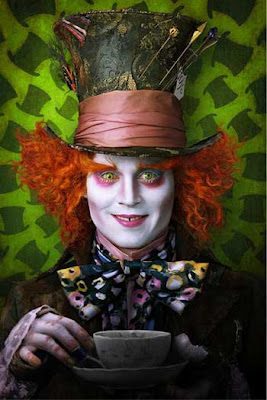
Tim Burton’s Alice in Wonderland, starring Johnny Depp, opened this weekend, and I couldn’t help but reflect on an encounter I had with the internationally renowned thespian when I was still waiting tables in New York.

By 1991, less than five years since I arrived in the Big Apple, my freelance work as a Marvel character actor and writer for the company’s fan magazine, Marvel Age, had grown to the point that I was only a few months from becoming an independent contractor full-time and leaving the food-service business altogether. I was sometimes bartender, most times waiter at an Italian restaurant called Valentina’s in Tribeca, an area on the lower west side of Manhattan.

It was an unremarkable eatery. The décor was tired and dated: wood-paneled, ecru wainscoting; maroon and graying (from having never been cleaned) paisley-print flock wallpaper; worn Persian-style, wall-to-wall carpeting; miniature, faux-crystal chandeliers, yellowed from age and neglect; tables topped with carnation pink cloth; and heavy, wooden chairs with seat cushions in desperate need of reupholstering. The place had remained unchanged, since its opening decades prior, and so had its clientele, making the appearance of Johnny Depp one evening all the more astounding.

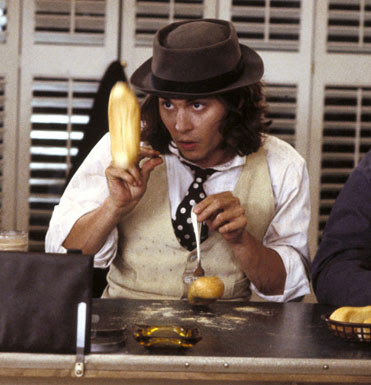
Depp’s cachet was high from his success in 1990’s Edward Scissorhands. He walked in one dead weekday night for dinner with a female friend in tow. The maitre d’—an older disgruntled, failed actor named Doug—didn’t recognize the young star, but he wouldn’t have known anyone younger than Walter Matthau. He seated the party in my section—actually, the whole restaurant was my section that night (dead, remember?). I identified Depp instantly.

“Two Pelligrino’s,” Doug reported to me from my perch at the bus station where he deposited the extra two settings from the four-top at which he had seated the future Jack Sparrow, before heading to the bar to pick up the bottled Italian sparkling waters Depp and co. had ordered.

I watched until Doug had the drinks and glasses precariously balanced on a cocktail tray and was returning unsteadily to the table, before asking, “Don’t you know who that is?”
I knew full well Doug hadn’t a clue from the innocuous way he acted when escorting the Depp party to their table. I also knew Doug—as a wannabe celebrity—would react like a dog when asked if it wanted a cookie when I posed the question. But as he was already committed to delivering the drinks, all he could do was continue on his awkward way, only now with the extra onus of serving big stars! As Bugs Bunny would say, “Ain’t I a stinker?”

When Doug returned—fortunately sans incident—there was noticeable sweat on his prodigious forehead and he was visibly shaken.

“Wh-who…? Who is it?” he stammered, barely keeping his voice below a whisper.

“It’s Johnny Depp,” I replied, as if to say, How could you not recognize one of the legends of our time? How could you have been treating him like just another person? Then I proceeded briskly to the table to give Depp and his date the specials for the evening, leaving Doug to alternately fret about his atrocious behavior while also wonder who the hell Johnny Depp was.

I was never one to get caught up in the celebrity of television and movie stars. I provided excellent service regardless of who I was waiting on. From what I’d observed, Depp showed neither haughtiness nor ego. As I approached he and his date were leaning in close to one another, holding hands across the table, giggling while chatting, signs indicative of a couple newly in love. His female companion looked familiar, but I just couldn’t place her face. She was diminutive, had beautiful dark features, short-cropped hair and alabaster skin. I knew Doug wouldn’t be any help in her identification; she was several generations removed from Mary Pickford, after all.

The pair kindly listened as I delivered that evening’s specials before saying they were ready to order. Depp gentlemanly ordered a split Caesar salad for both and a pasta primavera for the lady before pausing.

“Can I get the veal piccata, only with chicken?” he humbly inquired.

“You want chicken piccata.” I replied, as if being asked a trick question.

“Can you do that?” he furthered. In Depp’s defense, veal piccata was listed on the menu, whereas the chicken alternative was not.

“Of course, it’s the sauce that makes it piccata,” I explained. “The chef can just substitute chicken for veal.”

“Great. I’d like that and an order of tortellini,” he finished.
“Do you want the tortellini before the main course?” I asked.

“No, you can bring everything together.”

“That’s an awful lot of food, you know?” I cautioned.

“Yeah, but I’m really hungry,” he explained.

“I think your eyes are bigger than your stomach,” I warned, using a saying of my mother’s when I ordered more food than I could possibly eat. “Let me bring you the tortellini,” I continued. “I’ll check when you’re halfway through, and if you want, I can put in the chicken piccata order then and have it ready when you’ve finished the tortellini.”

He seemed pleased with my compromise and the two went back to making googly eyes at one another while I headed for the kitchen. On the way, I passed Doug interrogating the Hispanic busboy as to the identity of my diner. Unsuccessfully, I might add. Though, I’m willing to bet the busboy knew exactly who Johnny Depp was, but was merely messing with Doug (Ah, I trained him well).

When I saw that Depp’s tortellini was half eaten, I returned as promised.

“You were right. It’s very filling… and very good,” he admitted. “I won’t need the chicken piccata.”
Depp ended up not quite finishing the tortellini, but waved off a doggy bag when offered. He then asked how long the restaurant had been there, explaining that he and his companion were just walking around when they found it. He seemed surprised that he had never heard of Valentina’s before. My feeling was that the place, like Charlie Brown’s Christmas tree, just needed a little love and attention, so it was nice to hear Johnny Depp give his kudos.

“You are who I think you are?” I then asked. Perhaps, I suffered a moment of uncertainty when he remarked so positively about the place. The food was good, but while being a far cry from the Italian food served from chafing dishes at buffet-style wedding receptions, it was also a ways removed from the cuisine served at any of Chef Mario Batali’s establishments. And had Depp actually took in the place’s ambiance, instead of staring into his gal pal’s eyes the entire time with limited pauses to interact with Doug and me, his opinion surely would have varied. I mean, the restaurant was the sort of place that bowling leagues would rent out for their annual dinners.

“Yup,” was his economic reply.

“Just wanted to make sure,” I explained. “Personally, I couldn’t care less, but whenever I go home to visit, my family always wants to know who I’ve seen.”
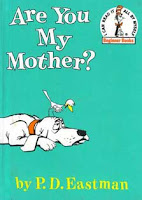
I then turned to Depp’s date. “And are you anyone?” I regretted the question before the last syllable passed my lips. The bird in the children’s book, Are You My Mother? didn’t sound as pathetic as I did.

“No… I’m nobody,” she replied, then the pair broke out in laughter. I still didn’t know how badly I’d blundered, but was positive I’d screwed up any chance of getting a good tip.

The check came to a modest sum—just over $40.00. Imagine my surprise when I discovered Depp had matched that total, leaving me $40 dollars. And he left Doug another $20. Maybe he really did enjoy the experience, although in my case he probably just felt sorry.

Soon after they had departed I had a Homer Simpson “D’Oh!” moment: Depp’s cherubic companion was Winona Ryder. The two had met while filming Edward Scissorhands, and their affair was in all the tabloids and magazines, and on all the television gossip shows at the time. And no doubt, you my forgiving Bloglodytes, figured it out almost immediately. I’d like to think I fell victim to the whole stars-never-look-in-person-as-they-do-on-screen theory. Or that my ignorance was a result of never reading those trashy rumor-mongering periodicals or watching their televised equivalent.

Oh, Hell, who am I kidding…

Just call me Doug.

Monday, February 22, 2010

Tim Burton at the MoMA

If you are anywhere near Manhattan in the next several weeks, creep, crawl, lurch, or better yet, run as if some unspeakable horror is chasing you, to the Tim Burton exhibit at New York’s Museum of Modern Art (MoMA). Burton is a filmmaker (Beetlejuice, Batman, Willy Wonka, Sweeney Todd, etc.) the type whose distinctive touch is instantly discernable in everything he creates. Much like the films of Terry Gilliam, the Coen brothers or Hal Hartley, one cannot help but know they are watching a Burton flick.

This Burton-inspired balloon stands in the foyer of New York’s Museum of Modern Art (MoMA)

What many may not realize is that Burton is also an artist. But it won’t take long for anyone experiencing the MoMA exhibit to see that Burton’s talent in the visual arts is as masterful as that in his filmmaking.

NOTE: Get your tickets in advance; most days sell-out long beforehand.

The entrance to the Tim Burton exhibit at the MoMA

I had seen some of Burton’s preliminary sketches for various films, such as Nightmare Before Christmas, and those he provided for Melancholy Death of Oyster Boy and Other Stories, his short story collection that was released a few year ago. But I expected more of the exhibit to focus on the former—along with props and costumes from his movies—than the latter, less commercial work.

I was happily surprised.

Sure, there are cases filled with puppets from the aforementioned Nightmare and his other stop-motion feature, Corpse Bride; props, such as the heads of Sarah Jessica Parker’s and Pierce Brosnan’s characters in Mars Attacks!; and costumes, including the cape worn by the headless horseman in Sleepy Hollow. But there are also hundreds of drawings and paintings, beyond those done for his movie work, from throughout his life.

Notice the fine line work and economy of color in this storyboard panel from Nightmare Before Christmas

Burton’s art is extraordinary; his line work—the control and wherewithal of such—had me shaking my head in profound disbelief. Even in his most lackadaisical of doodles, one can see genius. It’s no wonder he won a scholarship to the prestigious CalArts, the fine arts institution founded by Walt and Roy Disney, when he was eighteen.

Isn't it romantic?

Artists Gahan Wilson, Edward Gorey and MAD magazine were clear influences in both subject matter and technique. And Burton’s signature twisted, subversive humor is evident in his earliest pieces. I especially liked “Man Undressing a Woman with His Eyes,” the three-drawing sequence of a couple meeting at a party, “Man with Permanent Seeing Eye Dogs,” and “Little Dead Riding Hood,” but there are many others that tickled me.

Pablo Picasso once said that he spent his whole life learning how to draw like a child; to create with a mind free of preconception, prejudice, rule or life-experience. Burton’s art is a testament to this belief. His work is fearless, boundless, unfettered by convention. I was as awe-struck as I was jealous of his facility to just draw whatever comes to his mind; not think before putting instrument to paper.

Who doesn't think clowns are evil?

Accompanying some of Burton’s one-dimensional creations are maquettes by model maker Rick Heinrichs. And there are also a few “life-size” statues of his dark visions. All add to the exhibit’s enjoyment.

Unfortunately, the space MoMA provides for the exhibit is too limited—two small rooms. Most McDonald’s restaurants provide more space for their customers. Burton’s numerous drawings are crowded on the walls like the celebrity photos at Sardi’s. Alcoves the size of half-baths featuring screens on which the filmmaker’s early animated work played, were pigeon-holed in the exhibit like an afterthought. Unsurprisingly, museum-goers stopped—many even sat—before the screens to watch, creating immovable areas of traffic. I would have liked to enjoy them myself, but the set-up was not conducive to doing so. Other screens hung among the scads of art further impeding the flow of the patrons. And the exhibit was PACKED. I was among the first day’s group to enter and the space filled in minutes and only got worse as each successive scheduled ticket group’s time opened up.

What was the museum thinking? That an exhibit featuring the work of one of the world’s most popular visionary’s, in the country’s most populated—not including the millions of tourists that visit everyday—cities, wouldn’t be busy?!! I’d hate to think the decision was prejudiced, that the MoMA nabobs responsible for such decisions didn’t feel Burton’s work worthy of more space. As much as I enjoyed the work, the overall experience was hot, uncomfortable and completely AVOIDABLE had the exhibit been given the space it deserved.

Clean my room? Don't have to tell me twice!

Fortunately, MoMA’s website freely provides many, if not all, of the pieces featured in the exhibit, including the video segments. It’s not the same as seeing the art live, but at least your not getting jostled about or intimidated to move away from any piece you’d prefer to linger over.

Tim Burton’s work gets the full five spiders.

The exhibit gets a woeful two and a half spiders (the extra half a result of the museum’s website coverage of the exhibit)!

Shame on you MoMA!

Wednesday, February 17, 2010

The Brief Wondrous Life of Oscar Wao by Junot Díaz

I originally heard about The Brief Wondrous Life of Oscar Wao on a Sunday-morning program. In the segment, a lot was made of the fact that the main character—the eponymous Oscar Wao— was a comic-geek, and the author liberally referenced comics and other pop-culture minutiae in the telling of Oscar’s tale. This facet would nary induce a blip on the literary radar were it not for the fact that Wao had just won the 2008 Pulitzer Prize for Fiction.

That the highest honor in bookdom should go to a novel whose hero is a comic lover and whose author used four-color lore—at times daring to (gasp!) quote comic books—was unheard of. Apparently, the correspondent was unfamiliar with 2001 Pulitzer Prize winner, the exemplary The Adventures of Kavalier and Clay by Michael Chabon, a novel that doesn’t merely cite comics, but is actually immersed in that particular art form’s world. Fortunately, the segment was more journalistic than sensationalistic, but the inference that the Pulitzer Prize committee had lowered its standards or that the award had been cheapened by honoring Díaz’s work was plainly evident.

I didn’t care about the Pulitzer or the disparaging subtext of the segment—comics aficionados are used to it—the correspondent had me at “Fantastic Four,” to paraphrase Jerry Maguire. Wao went straight to my Christmas list and made it into my greedy little paws a few months later.

The Brief Wondrous Life of Oscar Wao is the story of an unsightly, social misfit Dominican’s journey to getting laid. Díaz uses the idea of achieving sex as a euphemism for Oscar’s struggle in overcoming his nigh-crippling shyness/awkwardness/not-fitting-in-ness and gaining acceptance. It’s a universal theme, one not exclusive to Dominicans.

Much to my delight, the book opens with an epigraph from Fantastic Four, Vol. 1, No. 49. Díaz further sets the stage with a poem from Nobel Prize (for Literature) winner Derek Walcott. Both present important facets to Oscar’s character: his affection for comics—more importantly the odd sense of greatness that geeks have for being expert in something beyond their fellow man, whether facility in comic books or fluency in Klingonese—and his feeling of displacement.

Author Díaz quotes World-Devourer Galactus in Wao’s opening epigraph

A short introduction on the Dominican idea of fukú follows. Fukú is an ancient curse with which our hero believes himself to be cursed. Whether Oscar is a victim of fukú or simply uses it to explain his perceived misfortune is left for the reader to decide.

An intriguing and clever start, the efficacy of which was immediately derailed by Díaz’s preponderance of footnotes. Or should I say, foot“novels”? Four of the seven introductory pages discussing fukú contain them. One travels half a page only to continue and conclude at the bottom fourth of the succeeding one. They are less frequent as the story progresses, but not less voluminous—at times extending more than two pages!

These short novels-within-a-novel most often explain references to Dominican culture, figures and language in the main text. They are engrossing in their own right, but intrusive. I found myself taking a deep breath before tackling them and pausing to recollect the main storyline upon my return. It was like putting a traffic stop on the Autobahn.

Far fewer of the notes concerned comic-book or pop-culture references—most of those were written into the text in a way that they needed no further explanation—and the info contained in those was already familiar to me. So it not only impeded the flow of my reading, but also proved aggravating each time I realized I need not have stopped, which I continued to do for fear that I might meet some nugget of info of which I wasn’t aware.

When Díaz wasn’t interrupting Oscar’s journey with footnotes, he was abruptly changing the story’s point-of-view. From Oscar to his sister, to the childhood tale of his mother, and back again. There were chapters that I was several pages into before I realized the narrator had changed, forcing me to return to the chapter’s start.

An author’s use of language or particular character’s vernacular normally deepens the reading experience. The opening dialogue of John Kennedy Toole’s brilliant 1981 Pulitzer Prize-winning novel, A Confederacy of Dunces, is a perfect example. The heavy Cajun accent that Toole employs takes some getting used to, but well worth the effort. And once familiar—by the end of that inaugural scene, easily—it proves no obstacle for the remainder of the book. Like anchovies in a well-crafted puttanesca: they add depth and complexity to the dish, but will only go unnoticed if not included.

Díaz’s liberal use of Spanish could have had the same effect, enhancing the depth and complexity of the novel and its characters. Unfortunately, the reader is never allowed to familiarize themselves with Wao’s voice—there are just too many other distractions—so the author’s use of language only exacerbates the situation.

I got the sense as I was reading that Díaz didn’t trust his writing talents or the story or both. It was as if he were trying to be clever to compensate.

Wao is nonetheless a good book. Not a great book. Just a good one. And that has less to do with its not meeting my high expectations than with the author’s overuse of these literary devices.

And because Wao is a Pulitzer Prize winner, it has to be held at a higher standard. Compared to the aforementioned Chabon and Toole classics, The Brief Wondrous Life of Oscar Wao falls painfully short and gets a disappointing three out of five spiders.

Wednesday, February 10, 2010

How Now Salchow?


Given former U. S. Olympic skater Nancy Kerrigan’s familial woes, the impending Winter Olympics in Vancouver, Canada, and this past weekend’s Super Bowl win by the New Orleans Saints, the following seemed appropriate.

For those of you have been living under a rock the past month, Kerrigan’s brother was arrested in connection with the death of his and Nancy’s father a couple of weeks ago. Her father died of a heart attack during an altercation with his son who had his hands around his dad’s neck at the time.

I met Kerrigan briefly shortly after her return from the 1994 Winter Olympics in Lillehammer, Norway, where she won the silver medal (Ukrainian Oksana Baiul won the gold) only seven weeks after the infamous “knee-capping” attack by rival Tonya Harding’s then husband, Jeff Gillooly, at the U.S. Figure Skating Championships in Detroit.

I was gigging at a trade show in New Orleans (hence The Saints reference) for Marvel’s newsstand department, which deals with comic sales through major distribution channels as opposed to direct distribution, which was how comic specialty shops received their books. A recently-signed Kerrigan was appearing at the Revlon booth. A few years earlier Ron Perlman, Revlon’s owner, had purchased Marvel, so I was splitting my appearance time between the Marvel Comics and Revlon booths.

Kerrigan was certainly affable enough, but somewhat cold (no pun intended). I wouldn’t say she was aloof, but rather there was an uncomfortableness that may have come from her unfamiliarity with stardom and the endless stream of fans wanting to meet and get an autographed photo with her. As a native Bostonian, I tried cajoling her into opening up, as she was from Stoneham, Massachusetts, a town north of Beantown. I had actually visited the town’s zoo—now called the Stone Zoo—as a child while on a field trip and remembered the trip fondly. Alas, my feeble attempts fell flat and her demeanor remained reserved.

Obviously, the feelings she had from meeting Spider-Man so overwhelmed her, it was all she could do so as not to faint.

Marvel, in its infinite wisdom, would oftentimes register me as Spider-Man (Note badge in photo)... So much for a secret identity!

Wednesday, February 3, 2010

Webheads III: The Quiet Storm, The Loner, The Watcher and The You-Go-First

After receiving countless letters and emails demanding its return, I bring you, my devoted Bloglodytes, the third installment in my discussion on the types of fans I met on my near decade-long adventure as everyone’s favorite neighborhood Web-Swinger. Those of you wishing to relive those pleasurable past postings—and who wouldn’t?—have only to click on the following convenient links. For “Webheads I: The Exuberant,” CLICK HERE; For “Webheads II: The Screamer, The No-No and The Return Engagement,” CLICK HERE.
I have to admit I’m tickled when one of you reveals to me your relating to a category I’ve described when you were a wee worshipper of the webbed wonder. See if any of these spark memories…

Occasionally, I’d encounter a child without a hint of trepidation. Case in point: This little boy threw himself into my arms, giddy at meeting his hero; a marked contrast to the wee lass in the background, who stares worriedly at our meeting while clutching onto her mom.

THE QUIET STORM
Patient, careful—but not hesitant—Quiet Storms were determined to show no fear before their peers. Most often, they’d appear accompanied. I’d easily envision Quiet Storms urgently telling attendant parent that they didn’t want Mom or Dad standing by them during their Spider-Man encounter; that would be far too embarrassing. Not that the Quiet Storms wanted said parent to leave the area entirely. The savvy Mom or Dad would save their independent offspring the ignominy of their having to ask their parent to stick around with a “I’ll just be waiting over here,” as they indicated the exit area.

A far cry from any of the children described here, this young lad could not tell me enough about his day, and queried me in great length about why I was in town, where my eyes were, and who I had been battling recently.

A Quiet Storm’s steps were measured as they neared. They'd never offer conversation, or elaborate with their responses. The internal conflict betwixt their fear at approaching Spidey and the pressure to appear unafraid before their peers didn’t allow for extraneous activity. They’d answer quietly and succinctly, even though their insides were flip-flopping in terror.

“Would you like an autographed comic?” I’d ask, the book before me, Sharpie already poised.

“Yes, sir.” they’d most often politely reply. From the corner of my eye, the parent would reveal themselves with a more-than-casual-observer smile.

“What is your name?”

“Trey Daniel Phillips.”

“I’ll just put it to ‘Trey.’ Is that okay?”

“Yes, sir.”

“And how do you spell that?”

“T-R-E-Y…” Each letter carefully articulated, as if a code that would diffuse a bomb were being conveyed over a walkie-talkie.

Most often, the moment they had completed their task—must… overcome… fear… get… autograph—they’d scamper back to their parents, doing an emotional one-eighty—beaming, showing off their comic and talking a mean streak.

THE LONER:
Like Clint Eastwood in a Sergio Leone Spaghetti Western, The Loner would appear. Unfettered by parents, guardians, siblings or friends, they’d dutifully wait in line to get a comic book and go. Like the Quiet Storms, they were not talkative, just economic in their use of words, usually saying no more than a “Hello, Spider-Man” at the start, stating their name when asked, and ending the encounter with a “Thank you, Spider-Man,” before disappearing by themselves into the crowd. The Loner was never frightened, just independent. Yet, unlike The Exuberant, who were also carefree, The Loner was unemotional and never shared his experience with others.

The Loner bothered me. I always wondered what caused them to be so independent and alone at such a young age.

THE WATCHER:
From the crowd of onlookers, waist-level sets of eyes stare intently at the proceedings: The Watchers! These were children—oftentimes brethren of others in line—who were scared to death to confront Spider-Man personally, yet fascinated enough to observe the proceedings from the safety outside the barriers. Sometimes they’d whimper for their brother or sister when their turn came up—certain their siblings were walking toward their doom. Of course, once their loved one escaped unscathed The Watcher couldn’t wait to grab the signed comic out from their hands for a peek.

I’d always offer the parents of Watchers an autographed comic from my perch, handing it to their brother or sister for delivery. Sometimes, depending on the reaction, I'd get up and give the comic to The Watcher myself, stretching as far as I could muster. The Watcher, too, would extend to their wee limits, just grabbing the corner of the comic with tremulous fingers. The scene was like that in many an adventure movie with the hero saving the heroine from a perilous fall with an impossibly outstretched hand at the last possible instant.

A lot of very small children, who didn’t know me from Elmo, were simply fascinated with the primary colors of the suit. Gotta love that red-and-blue!

Some children became Watchers when confronted with the moment of truth, after spending hours in line… much to the parent’s chagrin, I might add. Literally faced with their hero for the first time they’d stop short of the signing table and park themselves at the outskirts of the autograph zone, just out of range of whatever danger they considered might befall them if they got any closer.

Oblivious to their parents’ goading to either meet Spider-Man or concede defeat, the newbie Watchers remained stock-still in their parking spot, observing each successive child in line.

I had parents—overcome with impatience—literally leave their children by my table while they went shopping. They’d return an hour later to find their offspring still transfixed, frozen in the spot they’d left them, trapped between meeting their hero or fleeing. Oftentimes it was a sibling of The Watcher, who would return and drag their brother or sister off with a “C’mon, Mom’s leaving!”

THE YOU-GO-FIRST
Traveling in small packs or duos, the You-Go-Firsts would huddle together and shuffle warily toward the signing table, directing one another to be the first to meet Spider-Man. Much like a medieval jester—who would sample the king’s repast before His Highness to ensure the food wasn’t poisoned—The You-Go-Firsts or rather the Go-First would wriggle forward, to make sure the way was safe for the rest of his or her tribe.

You-Go-Firsts shared giggle-fits as they neared, the result of mutually-shared fraught nerves. Occasionally, the Stay-Behinds would have the audacity to push forward the volunteer of their group. Of course, once their tribe mate succeeded, they’d hurry forward en masse to claim their prize, forgetting the fear they held moments before. Sometimes duos would never come to a decision between themselves as to who would go first. So they sheepishly approached like conjoined twins attached at the hip.

Sometimes kids just wanted a hug...

It was always endearing to me to see wee You-Go-Firsts step forward who were BFFs. The tell-tale signs could be matching temporary tattoos on their forearms or identical barrettes in their similarly-styled hair; they might be clutching the purse or dressed in the same color schemes. Sometimes even they sported matching outfits. Meeting Spider-Man, with its high-risk level, was something that couldn’t not be done together. They’d depart, still arm-in-arm, clutching their autographed comics, already gabbing about the experience.

I’d like to think these encounters with me are retained with fondness, periodically brought up with a “Remember when we met Spider-Man…?”